Painting & Wood Finishing an A-Frame: A Practical Guide
How to protect and beautify an A-Frame's timber: surface prep, stains, oil- and water-based coatings, interior and exterior finishing, and a maintenance schedule.
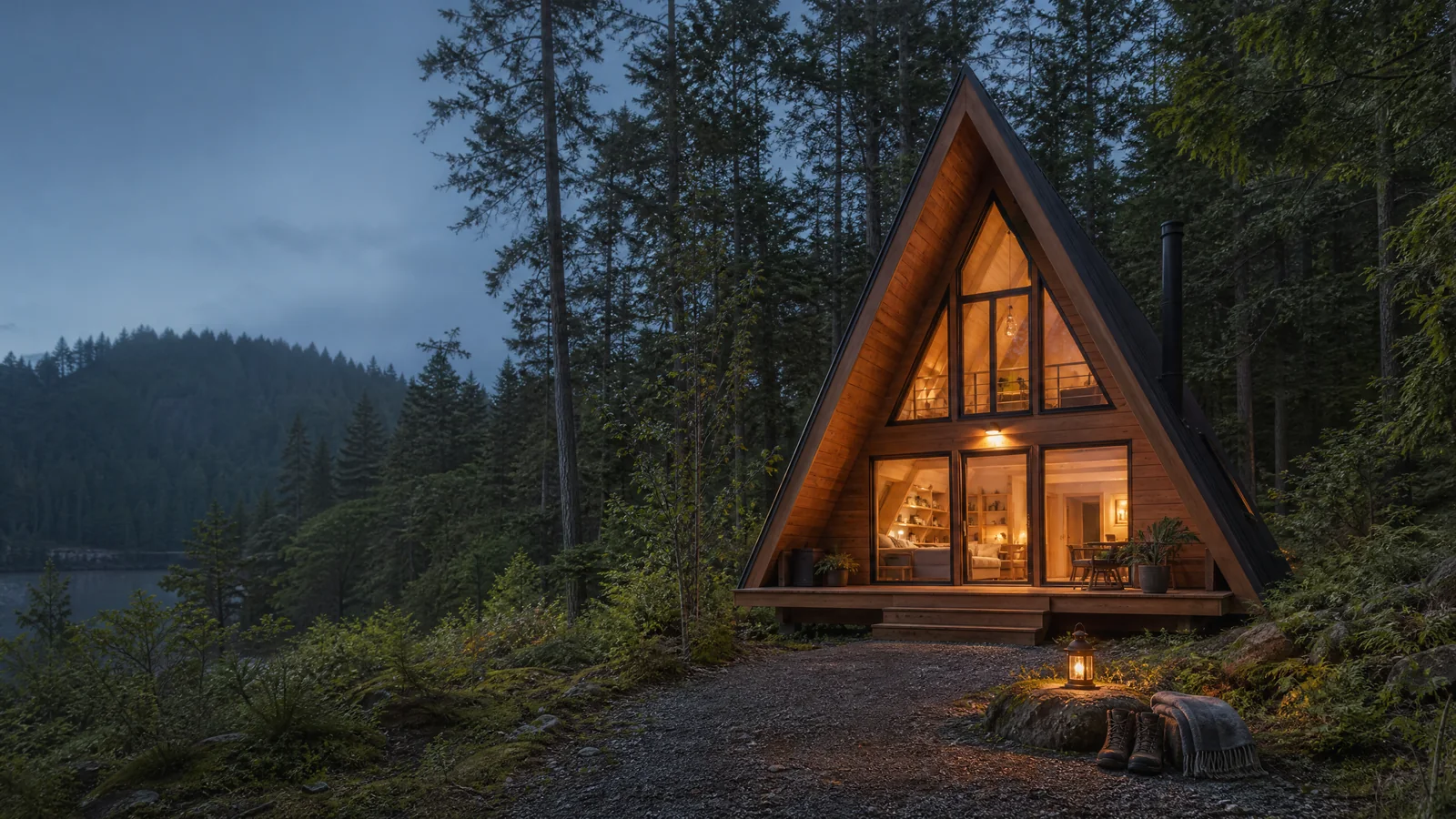
An A-Frame is mostly timber, and almost all of that timber sits on steep, angled surfaces exposed to sun, rain and snow. The finish you choose is the single layer that stands between beautiful wood and grey, cracked, mould-stained boards. Get it right and the same cladding can look good for decades with only light upkeep. Get it wrong and you will be sanding and stripping far sooner than you hoped. This guide walks through why timber needs finishing, which products suit the inside and outside of an A-Frame, how to prepare and apply them, and how to keep everything looking sharp with a sensible maintenance rhythm.
Why finish timber
Bare wood is not a finished surface, it is an exposed one. Ultraviolet light breaks down lignin at the surface and turns wood silver-grey within a season or two. Rain and snow drive moisture into end grain and joints, feeding rot and mould, while insects find untreated softwood easy to colonise. Because an A-Frame presents huge sloped faces to the weather, these effects are amplified compared with a conventional house. A good finish blocks UV with pigment, sheds or slows water, and adds fungicidal and insect-resistant protection. It is cheaper to maintain a coating than to replace degraded cladding, so finishing is best seen as protection first and decoration second.
Exterior finishes
The main decision outside is between penetrating finishes and film-forming finishes. Penetrating stains and wood oils soak into the timber and colour it without forming a hard skin. They wear by gently fading rather than peeling, which makes recoating simple: clean, and apply a fresh coat. Film-forming paints and thick varnishes build an opaque or glossy layer on top of the wood. They hide the grain, offer strong colour and long life, but when they fail they crack and flake, forcing you to strip back to bare timber.
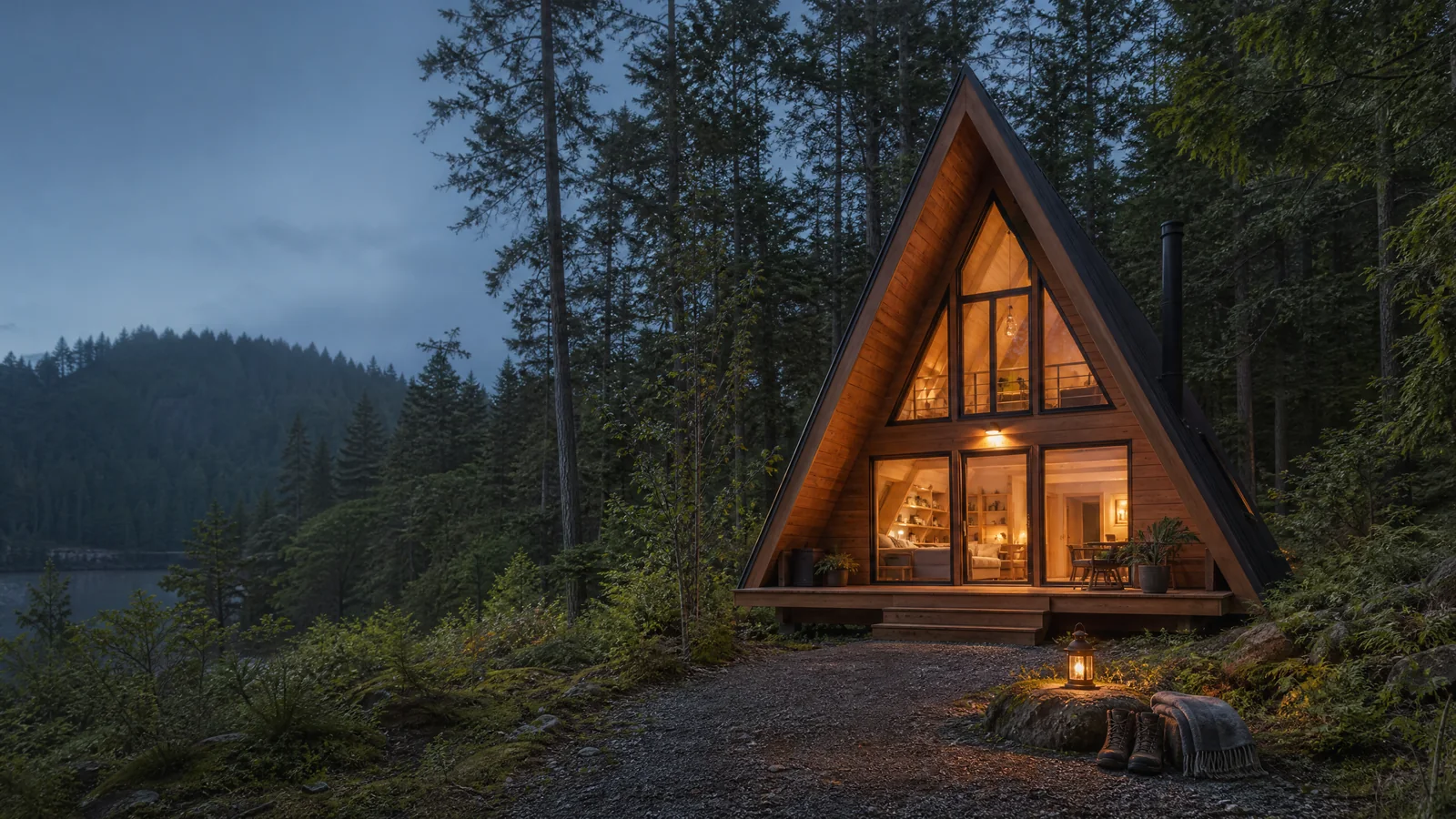 Rich warm exterior timber stain protection on modern A-frame facade
For cladding, breathable finishes are usually the wiser choice. Timber moves and holds moisture, and a breathable stain lets vapour escape instead of trapping it under a film where it lifts the coating and encourages rot. You also choose between translucent finishes that let the grain show and opaque ones that read as solid colour. Colour affects temperature too: dark tones absorb heat and can push a south-facing slope to high surface temperatures, stressing the timber and the coating, while lighter tones stay cooler. For more on tone and appearance, see the facade and colour guide and the overview of roofing materials.
Interior finishes
Inside, protection from weather is not the concern, so you can prioritise feel, light and air quality. Clear penetrating oils and hardwax-oils leave a natural, low-sheen surface that is easy to spot-repair. Matte varnish or lacquer gives a tougher, wipeable film for high-traffic areas. If the interior feels dark, a white-pigmented oil or a whitewash keeps the grain visible while brightening the space, which suits the enclosed lower walls of an A-Frame well.
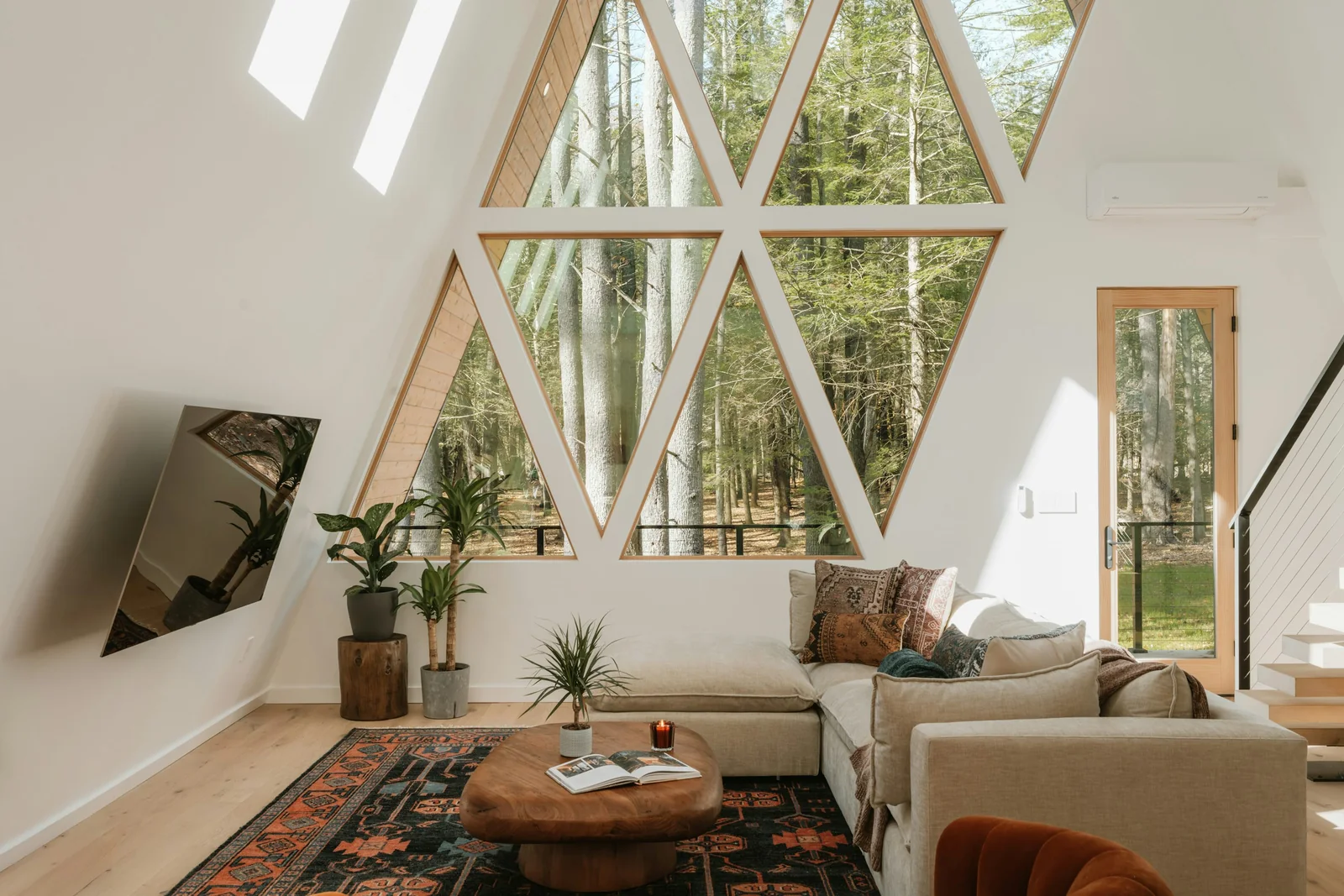 Bright white interior finish contrasting natural timber window mullions
Indoor air matters more than people expect, because you breathe near these surfaces every day. Choose low-VOC, water-based products where you can, and ventilate well while they cure. Pair your finish choices with the advice in the healthy indoor air guide so a fresh coating does not undo your air-quality efforts.
Surface preparation
Preparation is most of the job, and skipping it is the most common reason finishes fail early. Clean the timber of dust, grease and any mould or algae, treating growth with a suitable wood cleaner before you coat. Sand to open the surface and knock back raised grain, then remove any old failing coating: flaking paint must come off, while a sound penetrating stain can often just be cleaned and recoated. Timber must be dry, ideally below around 15% moisture content, or the finish will not bond and moisture will be sealed in. Mask glazing, hardware and adjacent surfaces before you start. Time spent here decides how good and how durable the result will be.
Application
Match the tool to the finish and the surface. A brush works oil and stain into the grain and is best for detail and end grain. A roller covers big flat cladding fast, and a sprayer is fastest of all on large sloped faces but needs masking and back-brushing to avoid a patchy, thin film. Most stains need two coats and most opaque paints two to three; oils are often applied thin, wet-on-wet, and wiped back. Watch the weather window: most coatings want a surface between about 10°C and 25°C, dry timber, no direct blazing sun and no rain for the drying period.
The sloped faces are the real challenge. Do not overreach from a ladder on a steep A-Frame roof or gable. Use proper scaffolding or a scaffold tower so you can work at a steady arm's length, keep a wet edge across each board run, and finish full lengths without stopping mid-panel.
Finish comparison
| Finish type | Where used | Look | Durability / recoat | Rough cost |
|---|---|---|---|---|
| Penetrating stain | Exterior | Translucent, matte | 3–5 years | €6–12 / m² |
| Wood oil | Ext / Int | Natural, low sheen | 2–4 years (ext) | €5–10 / m² |
| Opaque paint | Exterior | Solid colour | 7–10 years | €8–15 / m² |
| Hardwax-oil | Interior | Warm, satin | 5+ years | €7–12 / m² |
| Matte varnish/lacquer | Interior | Clear, wipeable | 7–10 years | €6–11 / m² |
Maintenance schedule
Finishing is a cycle, not a one-off. Inspect the exterior once a year, ideally in autumn, looking for fading, cracking, lifted edges and dark patches. Wash the cladding gently to remove dirt and spores that hold moisture against the wood. Recoat exterior timber before it fully fails: penetrating stains typically want a fresh coat every 3–5 years and oils every 2–4, with south- and west-facing slopes needing attention sooner. Touch up worn spots and end grain before winter, when driving rain and freeze-thaw cycles do the most damage. This routine sits naturally alongside the seasonal maintenance guide, and building details in the A-Frame building guide show where water tends to collect.
Safety note: Finishes and solvents mean real hazards. Ventilate enclosed spaces and take breaks in fresh air when working inside. Wear a dust mask when sanding and a solvent-rated respirator, gloves and eye protection with oil- and solvent-based products, and store oily rags in a sealed metal container as they can self-ignite. Above all, respect the steep roof: use scaffolding, towers or roof anchors and a harness rather than balancing on a ladder, and never work at height alone or in wind or wet.
FAQ
Stain or paint for exterior A-Frame cladding?
For most timber cladding, a penetrating stain is the easier long-term choice. It breathes, ages by fading rather than flaking, and recoats with a simple clean-and-coat. Choose opaque paint when you want a strong solid colour or need to cover previously painted or patchy wood, and accept that it will eventually need stripping.
How often should I recoat?
Plan on roughly every 3–5 years for exterior stains and 2–4 years for exterior oils, sooner on sun-baked south and west slopes. Interior finishes last far longer. The surface itself is the best guide: recoat when the colour fades and water stops beading, not after damage appears.
Can I leave the wood natural?
You can, and some owners like the driftwood-grey look of weathered timber. Be aware it is a cosmetic choice, not protection: bare wood still needs durable, naturally resistant species and good detailing to shed water, and it will check and split more over time. A clear UV-stabilised oil is a middle path that keeps a natural tone with real protection.
Ready to plan your build?
Knowing your finishing plan helps you budget the whole project accurately. Use our A-Frame calculator to estimate timber quantities, surface areas and costs, so you can size your finishing materials and maintenance budget with confidence before the first coat goes on.
A-Frame Facade and Colors: Exterior Looks That Last
Choosing facade materials and colors for an A-Frame: timber cladding, coatings, roof and glass contrast, blending into nature, and UV/moisture protection.
Solar Panels on A-Frame Roofs: Installation and Energy Guide
How to install solar panels on steep 60-70 degree A-Frame roofs. Compare monocrystalline vs thin-film panels, mounting systems, and ROI calculations.
Seasonal A-Frame House Maintenance: Complete Checklist
Learn how to maintain your A-Frame house throughout the year. Spring roof inspection, summer wood treatment, autumn cleaning, and winter preparation.