A-Frame Facade and Colors: Exterior Looks That Last
Choosing facade materials and colors for an A-Frame: timber cladding, coatings, roof and glass contrast, blending into nature, and UV/moisture protection.
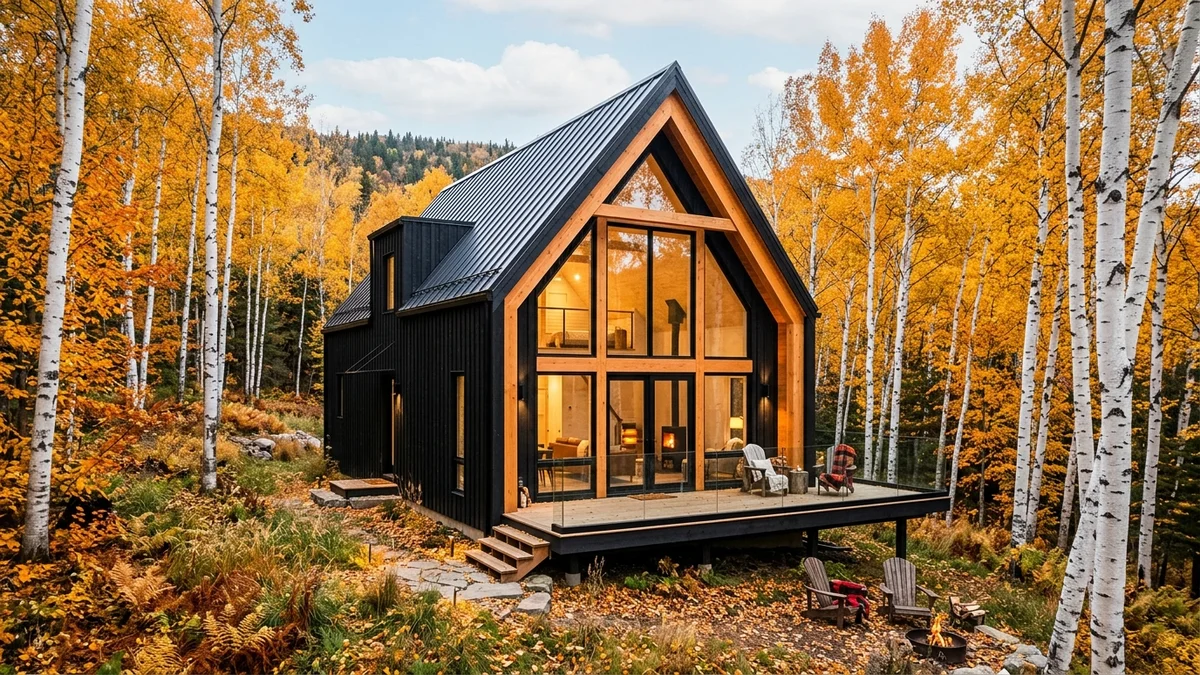
On a conventional house, the facade is a set of vertical walls and the roof is something separate up top. An A-Frame turns that logic on its head. Here the roof is the facade — those two great sloping planes reach almost to the ground and become the first thing anyone sees. That means your cladding and color choices do not just decorate the building; they define it. And because those surfaces face the sky directly, they take the full force of sun, rain and snow year after year. Getting the material and the finish right is the difference between an exterior that still looks sharp in fifteen years and one that fades, streaks and peels after three.
Cladding materials
The steep, uninterrupted planes of an A-Frame reward materials that come in long lengths and read cleanly across a big surface.
Timber cladding is the classic choice and still the most popular. Larch and cedar are naturally durable and rich in protective oils, so they resist rot even when left to weather. Thermally modified wood (spruce or ash baked at high temperature) is dimensionally stable and handles moisture swings well. Standard spruce is the cheapest but needs the most protection. Vertical board-and-batten or narrow shiplap boards emphasize the height of the gable and shed water quickly.
Metal cladding — standing-seam or corrugated steel and aluminum — suits the long slopes beautifully because a single panel can run from ridge to eave without a horizontal joint. It is light, fireproof and nearly maintenance-free, and it lets snow slide clean off.
Fiber-cement boards mimic timber but will not rot, burn or feed mold. They are heavier and need careful fixing, but the color is baked in and lasts.
Shingles — timber shakes or bitumen shingles — wrap the curved details near the ridge well and give a textured, cabin-in-the-woods look.
Choosing colors
Color on an A-Frame is a big commitment because there is so much surface. Three directions dominate.
Natural wood tones — clear or lightly pigmented oils that let the grain show — root the house in a forest or lakeside setting and age gracefully to silver-grey if you let them. Bold dark facades in black or charcoal have become the signature A-Frame look; they read as modern and sculptural and make the glazing pop. Light colors — pale grey, sand, soft white — feel airy and coastal.
There is physics behind the aesthetics. Dark surfaces absorb solar heat, so a black facade in a hot, sunny climate can push cladding temperatures well above 60 °C, stressing the finish and warming the space behind it. Light colors reflect that energy and stay cooler. Match the tone to the landscape too: earthy browns and greens disappear into forest, greys and whites belong on the coast, and warm timber suits the mountains.
Roof-and-glass contrast
The best A-Frames play the cladding against the gable glazing. That triangle of glass at the front is the face of the house, and a darker or textured cladding around it frames the view and makes the glass feel deliberate rather than accidental. The entrance door is your other accent — a single saturated color there, or a natural timber door against a dark facade, gives the eye somewhere to land. Keep trim colors simple: either match the trim to the cladding for a seamless monolithic look, or pick one contrasting trim tone and use it consistently on window frames, fascia and the door surround.
Protection and durability
Every exterior finish is fighting three enemies: ultraviolet light, moisture and mold. UV breaks down both wood fibers and the binders in coatings; moisture swells and cracks timber and feeds fungus in shaded, damp spots.
For timber, penetrating oils and stains are usually smarter than film-forming paint. They soak in, let the wood breathe, and weather by fading rather than peeling — which means recoating is a wash-and-reapply job, not a scrape-and-strip ordeal. Film paints give crisp color but eventually blister and demand full stripping. Whatever you choose, our painting and finishing guide walks through prep and product selection in detail.
Two construction details matter as much as the coating. A ventilated rainscreen — cladding mounted on battens with an air gap behind it — lets any moisture that gets in dry out fast, and this alone can double the life of timber cladding. And the A-Frame's own geometry helps: generous roof overhangs at the eaves throw rain clear of the lower facade and shade it from the harshest midday sun.
Cladding at a glance
| Cladding material | Look | Durability / maintenance | Rough cost per m² |
|---|---|---|---|
| Spruce (treated) | Warm, traditional | 15-25 yrs; re-stain every 3-4 yrs | €25-40 |
| Larch / cedar | Natural, premium | 30-50 yrs; oil every 4-6 yrs | €45-75 |
| Thermally modified wood | Even, refined | 30+ yrs; oil every 5-7 yrs | €55-90 |
| Standing-seam metal | Sleek, modern | 40-60 yrs; minimal | €40-70 |
| Corrugated metal | Rustic-industrial | 30-50 yrs; minimal | €25-45 |
| Fiber-cement board | Timber-like, matte | 40-50 yrs; wash only | €35-60 |
| Timber shingles | Textured, cabin | 25-40 yrs; treat every 3-5 yrs | €45-70 |
Prices are for material only and vary with region, grade and finish.
Maintenance rhythm
A lasting exterior is a habit, not a one-off. Oiled or stained timber wants a fresh coat every three to six years depending on exposure — south and west faces weather fastest. Once a year, wash the cladding down to clear dust, pollen and the green film of algae that builds up on shaded lower boards. After winter, walk the whole facade: look for lifted boards, cracked finish, blocked ventilation gaps and any dark mold patches near the ground where snow sat. Metal and fiber-cement need little more than that annual wash. For a full seasonal checklist that ties the facade in with the rest of the house, see our seasonal maintenance guide, and if you are still at the design stage, our climate-adaptive design article explains how orientation changes how hard each surface has to work.
FAQ
Is a black A-Frame a bad idea in a hot climate?
Not automatically, but it costs you. Dark cladding can reach 60-70 °C in full sun, which stresses the finish and adds heat load behind the facade. If you love the look, offset it with a ventilated rainscreen, deep overhangs, good insulation and a UV-stable, heat-tolerant coating. In genuinely hot regions, a mid or light tone will stay cooler and last longer.
How often do I need to re-stain timber cladding?
Expect a recoat every three to six years. Penetrating oils on larch or cedar can stretch toward the longer end; standard spruce and sun-blasted south faces need it more often. The tell is simple — when water stops beading and the color looks washed out, it is time.
Which cladding needs the least maintenance?
Standing-seam metal and fiber-cement board. Both keep their color for decades and ask for little beyond an annual wash. They cost more up front than treated spruce, but over twenty years the saved recoating labor usually closes the gap.
Plan your facade with real numbers
Cladding choice drives a big share of your exterior budget, and on an A-Frame the surface areas are larger than they look. Estimate your material quantities and costs for every option with our A-Frame calculator, then choose the facade that will still look right long after the build is done.
A-Frame Gear Storage Guide
A good A-frame guide starts with observation, not a universal prescription. Consider an active weekend ending with damp boots, packs and helmets waiting for Monday. The cabin’s location…
Healthy Air and Moisture in an A-Frame
A good A-frame guide starts with observation, not a universal prescription. Consider a closed cabin being opened after a damp, quiet week. The cabin’s location, weather, materials and…
The Ski and Snowshoe A-Frame
A useful A-frame solution begins with a real weekend scenario, not a theme. Imagine a winter group returning with snow on boots, wet gloves and tomorrow’s gear to prepare. The cabin has to…