Seasonal A-Frame House Maintenance: Complete Checklist
Learn how to maintain your A-Frame house throughout the year. Spring roof inspection, summer wood treatment, autumn cleaning, and winter preparation.
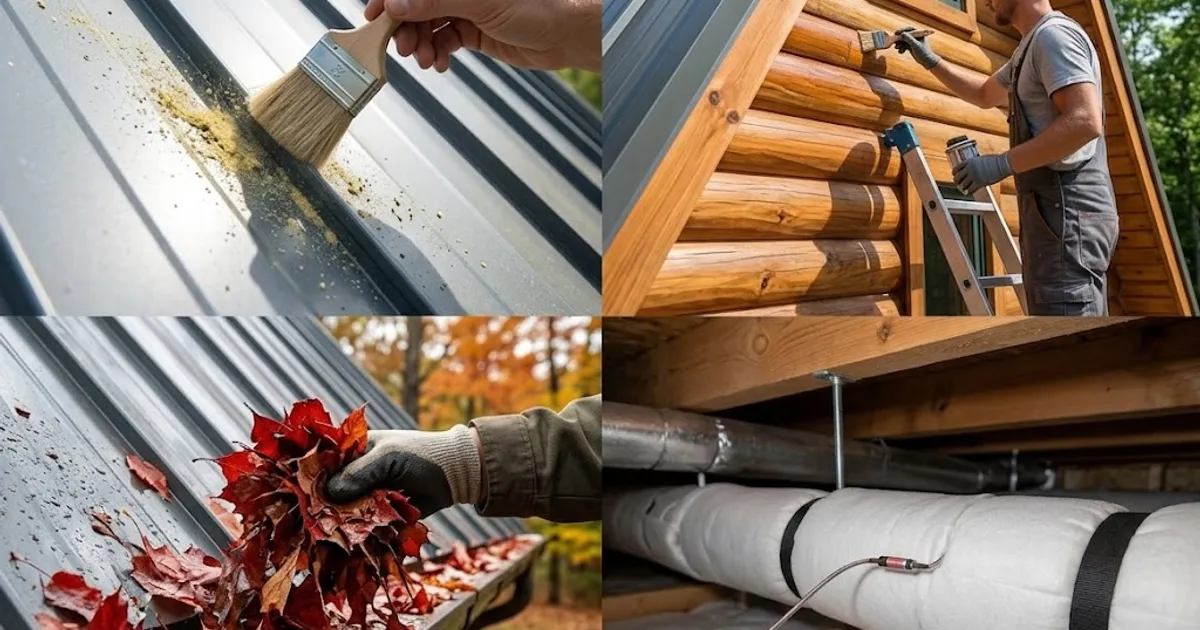
Seasonal maintenance of an A-Frame house is essential for preserving the structural integrity and extending the lifespan of your building. Due to the distinctive triangular form, A-Frame houses have a roof surface that constitutes approximately 85% of the total building envelope, making regular roof and timber maintenance critically important. A properly planned maintenance schedule can reduce repair costs by 60-70% compared to reactive maintenance approaches.
Spring Maintenance for A-Frame Construction
Spring inspection of your A-Frame house should be conducted as soon as temperatures consistently exceed 10°C, typically in March or April. This is the most important period for detecting damage caused during winter, when snow and ice exerted pressure on the roof structure.
Begin with a visual inspection of the roof surface from ground level using binoculars. Look for displaced or damaged roof panels, particularly in the ridge zone where the two roof panels meet at an angle of 45-60 degrees. For A-Frame houses with metal roofing, check that fastening screws remain tight — temperature fluctuations from -20°C to +35°C throughout the year cause thermal expansion that can loosen connections.
Inspect gutters and drainage systems. A-Frame houses have short gutters only at the lower edge of the roof, but their function is critical because all rainwater from both roof surfaces (total area of 120-180 m² for a typical house) must be channeled away. Clean gutters of leaves and verify that downspouts direct water at least 2 meters from the foundation.
Examine the timber structure internally, especially where rafters contact the foundation beam. Signs of moisture, mold, or soft wood indicate a problem requiring urgent intervention. The cost of replacing a single damaged rafter ranges from €500-1,500, while preventive treatment costs only €50-100 annually.
Summer Maintenance for A-Frame Houses: Wood and Facade Protection
Summer is the ideal time for treating wooden surfaces of an A-Frame house because temperatures above 15°C allow proper drying of protective coatings. The timber structure of an A-Frame house is exposed to UV radiation, rain, and temperature changes, requiring regular protection every 3-5 years.
For exterior wooden surfaces of A-Frame construction, a penetrating oil-based wood stain is recommended. Products such as Osmo UV-Protection Oil or Sikkens Cetol cost €25-40 per liter and cover 8-12 m² per liter. For a typical A-Frame house with 40 m² of visible wooden facade, total material cost is €100-200.
Before applying the coating, clean the surface of dirt and old flaking finishes. Use a soft brush or low-pressure washer (maximum 80 bar) at a distance of 30 cm from the surface. Never use a high-pressure washer on wooden surfaces of an A-Frame house as it can damage wood fibers and create pathways for moisture penetration.
Check seals around windows and doors. A-Frame houses often have large glass surfaces on gable walls (front and rear walls), where silicone seals last 8-12 years before they begin to crack. Seal replacement costs €5-10 per meter and prevents water ingress that could cause damage worth thousands of euros.
Autumn Maintenance for A-Frame Houses: Winter Preparation
Autumn maintenance of an A-Frame house focuses on preparing the structure for winter conditions — snow, ice, and low temperatures. This is the period when all exterior work should be completed before temperatures drop below 5°C.
Clear the roof of leaves and branches that accumulated during autumn. On the steep roof surfaces of an A-Frame house (pitch 45-60°), leaves typically do not remain long, but they can accumulate in gutters and around chimneys. A blocked gutter on an A-Frame house can cause water overflow directly onto the foundation zone, which is particularly dangerous before winter when water freezes and expands.
Inspect attic and roof panel insulation. In A-Frame houses, the roof simultaneously serves as the wall, so any weakness in insulation directly affects energy losses. A thermographic inspection (cost €150-300) can reveal areas where heat escapes, particularly at the ridge and in the foundation zone. Investment in additional insulation of 200 mm mineral wool (R-value 5.7 m²K/W) can reduce heating bills by 40%.
Prepare the heating system for winter. Whether your A-Frame house uses a wood stove, heat pump, or electric heating, an autumn check is mandatory. Clean the chimney (cost €80-150), check heat pump filters, and test thermostats. A-Frame houses of 60-80 m² typically require a heating capacity of 6-10 kW to maintain 20°C at an external temperature of -15°C.
Protect plumbing from freezing. Pipes running through uninsulated spaces (under floors or in gable walls) should be insulated with pipe insulation of minimum 13 mm thickness. If the A-Frame house is not used during winter, drain the plumbing system and add antifreeze to traps (material cost: €20-30).
Winter Maintenance for A-Frame Construction
Winter maintenance of an A-Frame house focuses on managing snow loads and preventing ice dams. The steep roof of A-Frame construction (pitch 45-60°) naturally sheds snow, but this does not mean you can neglect winter monitoring.
Monitor snow load on the roof. Although the steep pitch of an A-Frame roof allows snow to slide off, wet and heavy snow can remain, particularly when temperatures hover around 0°C. The maximum permissible load for a typical A-Frame structure is 150-200 kg/m². A meter of fresh snow weighs approximately 50-100 kg/m², while wet snow can weigh up to 400 kg/m³. If snow accumulates, use a roof rake (cost €40-80) to remove it from a safe distance.
Prevent ice dam formation at roof edges. Ice dams form when heat from the house melts snow on the roof, and water refreezes at the colder edge. In A-Frame houses, this is a less common problem due to good roof space ventilation, but it can occur if insulation is inadequate. The solution is improving insulation and ventilation — a ventilation channel of minimum 40 mm between insulation and roof covering prevents the roof surface from warming.
Check access paths and stairs around the A-Frame house. Snow sliding off the steep roof can accumulate around entrances, creating hazards for occupants. Install snow guards on the roof (cost €15-25 per meter) to control snow sliding and prevent roof avalanches.
Annual Maintenance Budget for A-Frame Houses
Plan an annual maintenance budget of 1-2% of the property value for your A-Frame house. For an A-Frame house valued at €80,000-120,000, this amounts to €800-2,400 annually. This budget covers:
- Wood protection (every 3-5 years): €300-600 (materials and labor)
- Gutter cleaning (twice yearly): €100-200
- Roof inspection (annually): €150-300
- Heating system service (annually): €100-200
- Seal replacement (every 8-12 years): €200-400
- Unexpected repairs: €200-500
Regular maintenance of an A-Frame house not only preserves property value but also prevents costly repairs. A neglected timber structure may require rafter replacement (€3,000-8,000 per rafter), while regular protection costs only a fraction of that amount.
Conclusion
Seasonal maintenance of an A-Frame house requires a systematic approach and regularity, but it is neither complicated nor overly expensive. The key lies in prevention — regular inspections and timely treatments prevent major problems from developing. Follow the checklist for each season and your A-Frame house will serve you for decades without major interventions.
For planning your A-Frame house and calculating construction dimensions, use our A-Frame calculator. If you are interested in how insulation affects the energy efficiency of your A-Frame house, read our detailed guide on insulation and energy efficiency.
Painting & Wood Finishing an A-Frame: A Practical Guide
How to protect and beautify an A-Frame's timber: surface prep, stains, oil- and water-based coatings, interior and exterior finishing, and a maintenance schedule.
A-Frame Plumbing & Water Systems: A Practical Guide
Plumbing an A-Frame: a compact wet core, freeze protection, winter drain-down systems, and options for off-grid cabins.
Winterizing an A-Frame: A Guide to Closing Up the Cabin
How to prepare an A-Frame cabin for an unused winter: draining the plumbing, protecting against freezing, damp and rodents, and roof and security checks before you leave.