Winterizing an A-Frame: A Guide to Closing Up the Cabin
How to prepare an A-Frame cabin for an unused winter: draining the plumbing, protecting against freezing, damp and rodents, and roof and security checks before you leave.
Many A-Frames are weekend or seasonal retreats, which means that when the cold sets in you face a choice: keep the cabin ticking over with a little background heat, or shut it down completely until spring. Both approaches work, but only if you do them properly. A cabin left carelessly can greet you in March with burst pipes, black mould creeping up the timber, and a family of mice nesting in the sofa. Spend a focused afternoon closing up correctly and you avoid every one of those costly surprises. This guide walks through the whole routine, from plumbing to security.
Plumbing: the biggest risk
Water is the single greatest threat to an empty cabin. When it freezes it expands with enormous force, and a pipe full of frozen water will split along its length. You will not see the damage until the thaw, when the split pipe floods the cabin as soon as pressure returns.
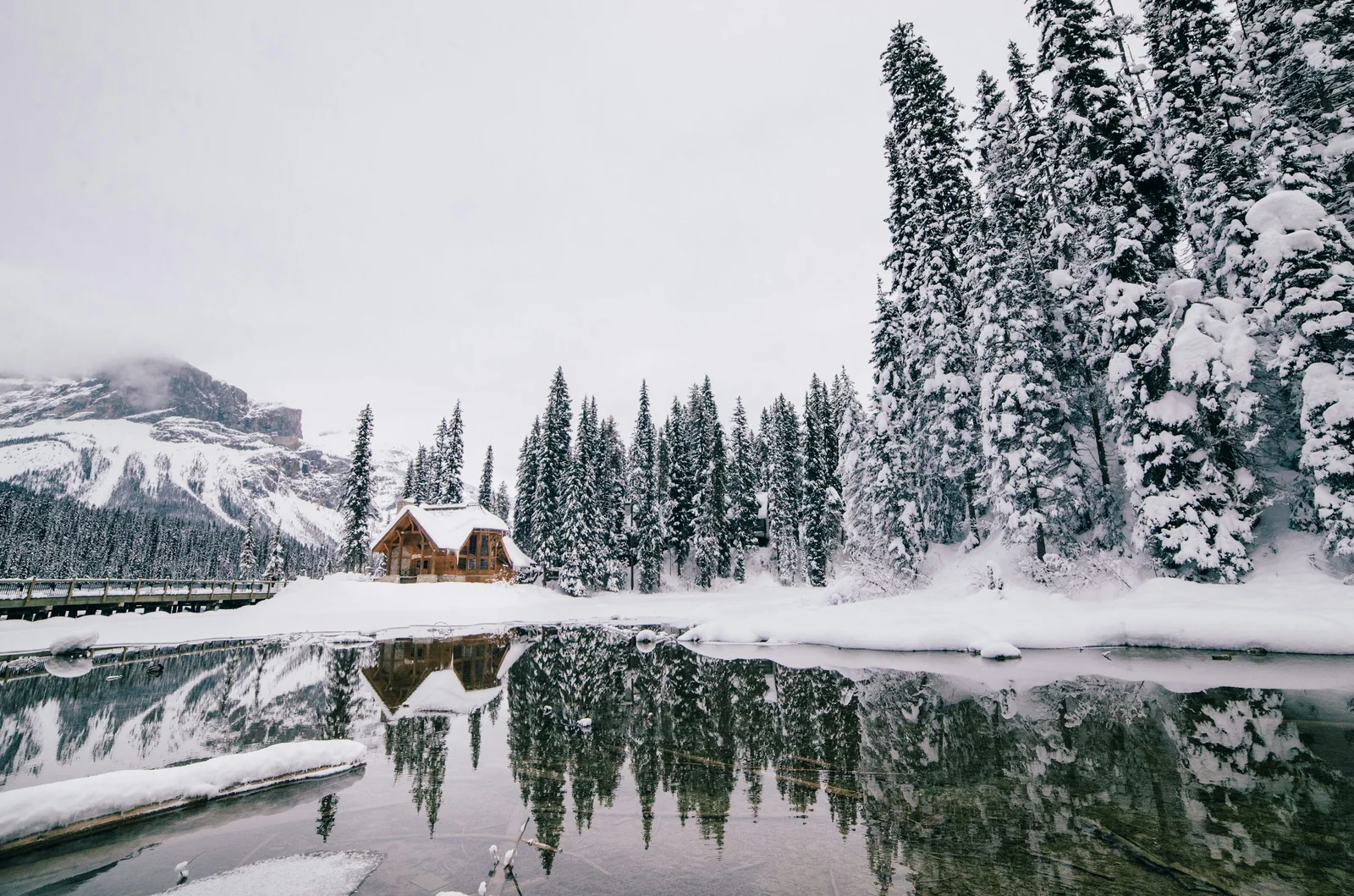
 Winter conditions and deep snowpack surrounding a mountain A-frame cabin
You have two safe options. The first is to keep the whole cabin above roughly 5°C using frost-protection heating, so the water never freezes. The second, and the most reliable, is to remove the water entirely:
- Shut off the main water supply.
- Open every tap, hot and cold, to release pressure.
- Drain the storage tank and the water heater.
- Blow out the remaining water in the lines with compressed air.
- Pour non-toxic (RV) antifreeze into every drain trap and into the toilet bowl and cistern.
The traps matter: a P-trap holds standing water by design, and that trapped water will freeze and crack the fitting if you skip the antifreeze. Our plumbing guide explains how to build in drain valves that make this a ten-minute job.
Heating strategy
The choice between leaving the heat on low and shutting everything down comes down to your power situation, your budget, and how the cabin is built.
 Cozy illuminated winter evening interior with roaring fireplace
Leave-on-low frost protection keeps a smart thermostat set to around 5°C, firing the heating only when the temperature drops near freezing. It keeps pipes safe without draining, and it stops the interior from getting bitterly damp. The downside is a standing electricity bill all winter and total dependence on an uninterrupted supply — a power cut during a cold snap defeats the whole plan. Linking the thermostat into a monitored smart-home system lets you watch the temperature remotely and get an alert if the heat fails.
Full shutdown costs nothing to run and carries no risk from a power cut, because there is no water to freeze and no system left on. It takes more effort to close up and to reopen in spring, but for a cabin visited only a few times a year it is usually the smarter, cheaper choice.
Damp, condensation and mould
An empty, unheated cabin is a magnet for damp. With no one opening windows or running the heating, moisture builds up, condenses on cold surfaces, and feeds mould. The A-Frame shape makes this worse: warm, damp air rises and collects in the tall apex, exactly where you cannot easily reach to wipe it down.
Fight it by keeping air moving and moisture low. Leave all interior doors and cupboards open so air circulates freely through the whole volume. Place moisture absorbers or a few tubs of desiccant around the cabin, especially up near the loft. Ventilate on the day you close up, and remove anything that holds moisture — bedding, towels, food, and damp firewood stored indoors. For a deeper look at airflow and healthy interiors, see our healthy-air guide.
Keeping pests out
As the temperature drops, mice, squirrels and insects go looking for a warm, quiet place to overwinter, and an empty cabin is ideal. A mouse needs a gap barely the width of a pencil to get inside.
Walk the exterior and seal every gap around pipe penetrations, vents, and the eaves with steel wool and sealant. Inside, remove all food without exception — even sealed packets attract gnawing. Store bedding, cushions and soft goods in hard-sided sealed bins rather than leaving them out, where they become nesting material. A cabin with no food, no soft nests and no easy entry is a poor prospect for pests.
Roof, gutters and exterior
Do the outdoor work before the first snow, while it is still safe to be on ladders. Clear leaves and debris from gutters and downpipes so meltwater can drain instead of freezing into ice dams. Check the roof surface and the flashings around the chimney and any penetrations, since a small leak becomes a big one under a winter's snow. Trim any branches overhanging the roof so they cannot break under snow load and puncture it.
Finally, know your snow-load situation. A steep A-Frame roof sheds snow well, but heavy accumulation still matters — our snow-load guide helps you judge whether your roof and site need extra attention before you leave.
Security while empty
A cabin that is obviously unoccupied for months is a target. Lock every door and window, and close shutters or blinds so valuables are out of sight. Consider a couple of battery cameras or door and window sensors, ideally with cellular backup so they keep reporting even if the internet or power drops — features that pair naturally with a smart-home setup. Let a trusted neighbour know the cabin is empty and how to reach you.
Closing-up checklist
| Area | Before you leave |
|---|---|
| Plumbing | Supply off, taps open, tank and heater drained, lines blown out, antifreeze in traps and toilet |
| Heating | Thermostat set to ~5°C frost protection, or system fully shut down |
| Damp | Interior doors open, absorbers placed, cabin ventilated, moisture sources removed |
| Pests | All food removed, gaps sealed, soft goods in sealed bins |
| Roof | Gutters cleared, roof and flashings checked, overhanging branches trimmed |
| Security | Doors and windows locked, shutters closed, cameras/sensors armed, neighbour informed |
Frequently asked questions
Should I leave the heat on low or drain everything?
Both are valid. Leaving frost-protection heat on is easiest to reopen but costs money all winter and fails if the power does. Draining everything costs nothing and is immune to power cuts, which makes it the safer choice for a cabin you rarely visit. If you leave heat on, back it up with remote temperature monitoring.
How do I stop mould in a closed cabin?
Remove moisture and keep air moving. Take out bedding, towels and food, leave all interior doors and cupboards open, and place moisture absorbers around the cabin, especially near the tall apex where damp air collects. Ventilate thoroughly on the day you close up.
What temperature protects the pipes?
Keep the interior above roughly 5°C and the water in the pipes will not freeze. That is the target for frost-protection heating. If you cannot guarantee that temperature all winter — for instance if power is unreliable — drain the system completely instead.
Plan and maintain your A-Frame with confidence
Closing up well is part of a wider seasonal rhythm of caring for your cabin. Ready to plan a build or a renovation with real numbers behind it? Use our A-Frame calculator to estimate dimensions, materials and costs, and set your cabin up to be easy to winterize year after year.
The Shared Cabin Playbook
A weekend cabin is at its best when an ordinary moment becomes easier to enjoy. For this topic, that moment is three households arriving with different expectations about supplies, cleaning…
A-Frame Build Timeline: From Idea to Move-In
A realistic A-Frame build timeline: preparation, construction and finishing phases, how long each phase typically takes, and what can push the schedule out.
Seasonal A-Frame House Maintenance: Complete Checklist
Learn how to maintain your A-Frame house throughout the year. Spring roof inspection, summer wood treatment, autumn cleaning, and winter preparation.