A-Frame Farm Stay: Agritourism as a Business
How to turn A-Frame cabins into a farm stay: guest lodging on your land, tying in with farming, seasonal demand, and revenue projections.
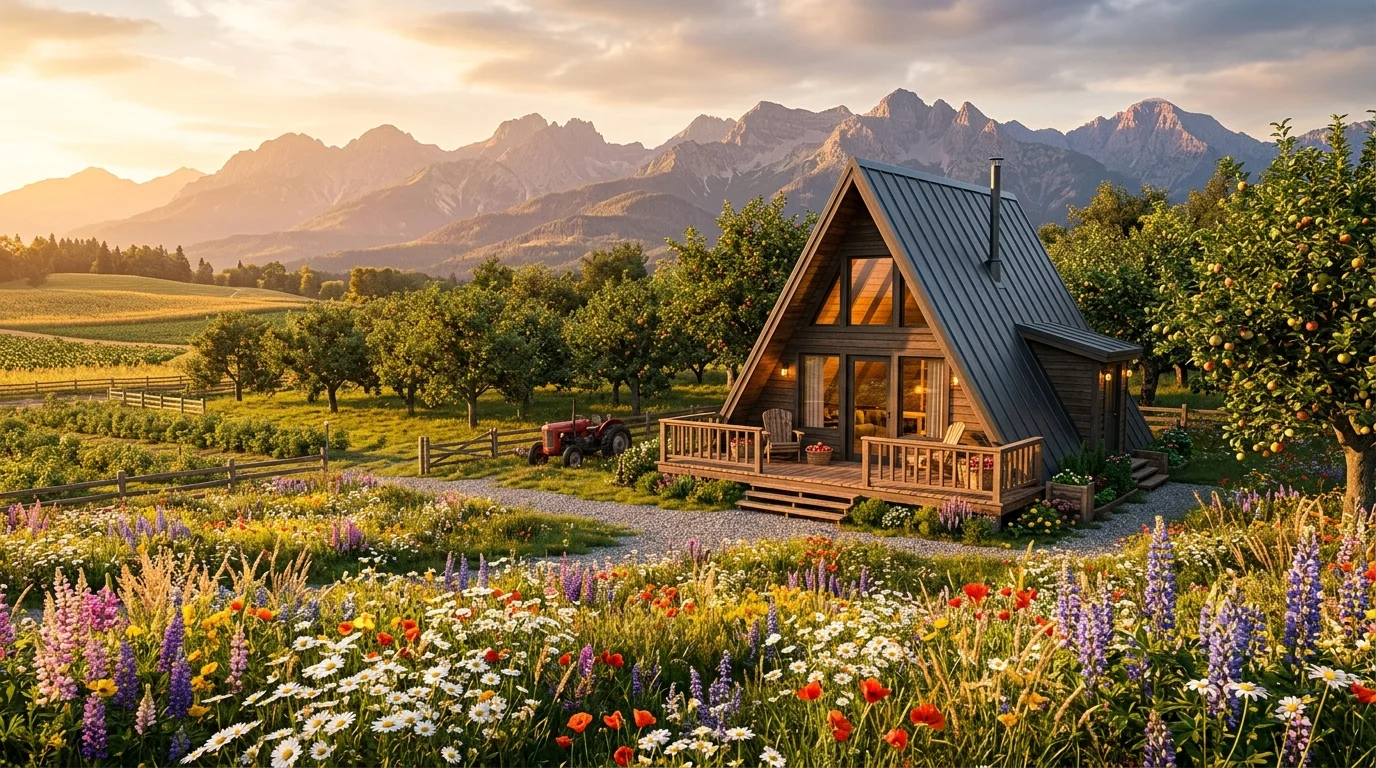
Guests are increasingly tired of anonymous hotels. They want to wake up to birdsong, gather eggs before breakfast, and watch the sun set over real fields instead of a car park. That craving for authentic rural life is exactly what a farm stay delivers, and placing one or a few A-Frame cabins on your working farm is one of the simplest ways to meet it. A patch of spare land that earns nothing today becomes welcoming, income-generating lodging, all while your farm keeps doing what it already does.
This guide covers why the triangular cabin suits a farm so well, how to tie the stay into the life of your land, and what the numbers look like when you turn a quiet corner of the property into an agritourism business.
Why A-Frames suit a farm stay
The A-Frame is a natural match for farmland, and a few practical traits make it especially strong here.
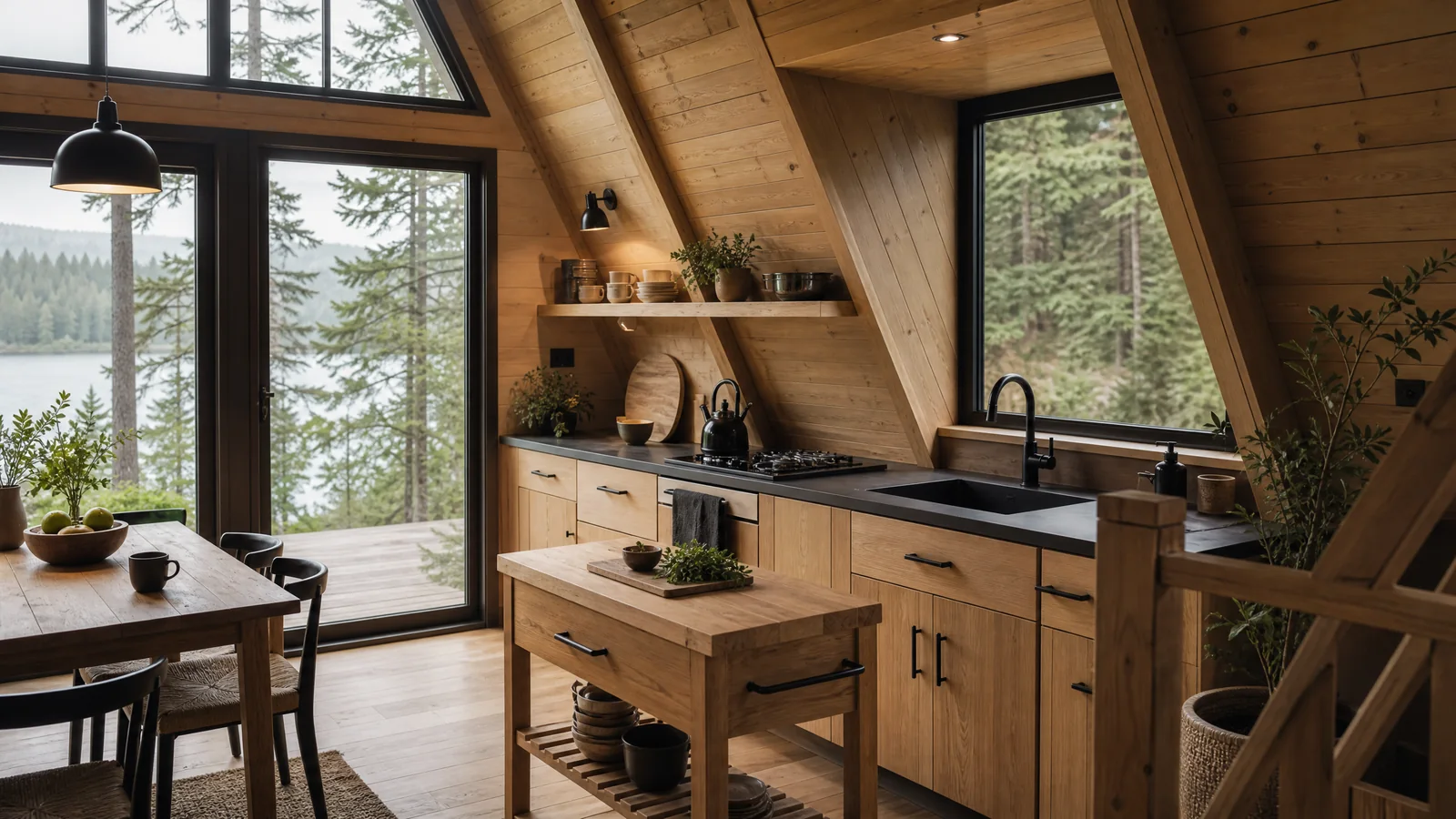 Farmhouse kitchen with solid timber harvest dining table and open shelving
Quick and affordable to build. A compact triangular cabin uses a simple, repeatable frame and little material. You can put up a rentable unit without diverting serious capital from the farm itself.
Photogenic and highly bookable. The steep silhouette against an orchard or a wheat field is exactly the image guests save and share. That visibility turns directly into bookings and lets you charge a premium over a plain room.
Low maintenance. The pitched roof sheds rain and snow, there is very little wall to weather, and the compact interior is fast to clean between guests. That leaves you more time for the farm.
They blend into the landscape. A wooden A-Frame sits comfortably among fields, orchards, and tree lines rather than fighting them. And because the model is modular, you can add a cabin at a time as demand proves itself, just like the phased approach in our micro-resort solution.
Tying into the farm experience
A farm stay is not just a bed in the countryside. What makes it special is everything happening around the cabin. Guests come for fresh produce delivered to the door, for a basket of eggs or a jar of honey, for animals they can meet and children can feed. They come for the seasonal rhythm: helping with the harvest, picking fruit in autumn, watching lambs in spring. And they come for what a city cannot offer, deep quiet and a sky full of stars.
 Outdoor terrace and firepit seating overlooking organic farm fields and orchard
The cabin is the base for all of it. Guests retreat to their private triangular hideaway at night, then step out each morning into a living, working farm. The more you weave the stay into the real life of the land, the more memorable it becomes, and the more guests pay and return.
Siting on the land
Where you place the cabins matters as much as how you build them. Choose a spot with a genuine view, over the fields, toward the hills, along the tree line, and set the cabins where they feel private rather than overlooked.
Keep them away from the noisier and smellier parts of the operation: the machinery shed, the muck heap, the areas where you run equipment early in the morning. A short gravel track is usually enough for access, and keeping the cabins within a reasonable distance of existing water and power lines keeps your utility runs short and your costs down.
Recommended configuration
The table below is a sensible starting point for a first farm stay that you can run alongside the farm.
| Parameter | Recommendation |
|---|---|
| Number of cabins | 1-4 to start |
| Floor area per cabin | 20-35 m² |
| Sleeping capacity | 2-4 guests |
| Bathroom | Compact ensuite |
| Kitchen | Kitchenette |
| Outdoor space | Deck facing the fields |
| Access | Simple gravel track |
Begin with a single cabin to test demand, then add units one at a time as bookings grow and you learn what guests value.
Investment and revenue
The figures below model one cabin. Treat them as planning ranges and refine them for your region with the calculator.
| Item | Amount |
|---|---|
| Build cost per cabin (20-35 m²) | €22,000 - 40,000 |
| Nightly rate | €70 - 120 |
| Occupancy (seasonal) | 35 - 50% |
| Scenario | Nightly rate | Occupancy | Annual revenue (per cabin) |
|---|---|---|---|
| Conservative | €70 | 35% | €8,943 |
| Realistic | €95 | 42% | €14,564 |
| Optimistic | €120 | 50% | €21,900 |
After cleaning, platform fees, and upkeep, a single cabin typically pays for itself in roughly 5-8 years, with the shorter end achievable in strong tourist regions or where the farm experience commands a premium. Because the model is modular, each additional cabin builds on the same access and utilities, so later units often reach payback faster.
Rules and practicalities
Rules for rural tourism vary widely from region to region. Zoning may or may not allow paid lodging on agricultural land, and if you plan to serve your own produce or cooked meals, food-hygiene rules will apply. These details differ enough that you should always confirm the specifics with your local authorities before you build.
Insurance is the other essential. A working farm has hazards a guest will not expect, machinery, animals, ponds, so make sure your cover extends to paying visitors and that you clearly mark and fence off anything that could be dangerous. A little signage and a short welcome briefing go a long way toward keeping guests safe.
Running it
Day to day, a farm stay runs much like any small rental. List across booking platforms and keep the calendars synced to avoid double bookings. Build a reliable cleaning and turnover routine so reviews stay high and same-day check-ins are possible. Lean on self-check-in with smart locks and simple automation so guests arrive on their own schedule without pulling you away from farm work; our smart-home article covers the setup.
Most of all, stand out with your story. The farm is your advantage, so tell guests about the animals, the seasons, and the produce. That authentic narrative is what a generic rental can never copy. Our rental business guide and the rental business basics cover the operational side in more depth.
Getting Started
- Check the rules for rural tourism and food hygiene with your local authorities.
- Pick a scenic spot on the land with a view, privacy, and easy access.
- Size your cabins in the calculator to firm up build costs.
- Plan utilities by keeping water and power runs short from existing lines.
- Build the first cabin and set up self-check-in.
- List it and tell your farm story across the platforms guests already use.
Frequently Asked Questions
How many cabins should I start with?
One. A single cabin lets you test demand, learn what your guests value, and refine the experience before you commit more capital. Once it books well and you understand your true costs, add cabins one at a time. Building on the same track and utility lines keeps each new unit cheaper than the last.
Do I need special permits to host guests on a farm?
Usually yes, but it depends entirely on where you are. Many regions require the land to be zoned for tourism and the accommodation to be registered, and serving your own food adds hygiene requirements. Always confirm with your local authorities before building, and factor any permit timelines into your plan.
Is agritourism seasonal?
It tends to peak with the farm's own rhythm, harvest, fruit picking, warm evenings under the stars, so occupancy is often higher in spring, summer, and autumn. You can smooth out the quieter months by leaning into off-season appeal: cosy cabins, quiet nature, and seasonal produce that a city stay simply cannot match.
Start Planning Your Farm Stay
A few A-Frame cabins can turn spare farmland into a welcoming, income-generating business without changing what your farm already does. Model your cabins, price your build, and see the numbers for your own land.
Calculate your farm stay costs →
Related reading:
A-Frame Property Value: Resale and Return on Investment
Does an A-Frame hold its value? An analysis of the factors driving resale price, rental yield, and long-term return on a triangular house.
Financing an A-Frame Build: Loans, Budgeting and Costs
How to finance an A-Frame: loan types, down payment, contingency reserve, payment phases, and tips for a realistic budget without nasty surprises.
A-Frame Rental Business: Guide to Profitable Vacation Rentals
Learn how to start a profitable A-Frame vacation rental business. Airbnb strategies, glamping equipment, pricing models, and return on investment.