A-Frame Property Value: Resale and Return on Investment
Does an A-Frame hold its value? An analysis of the factors driving resale price, rental yield, and long-term return on a triangular house.
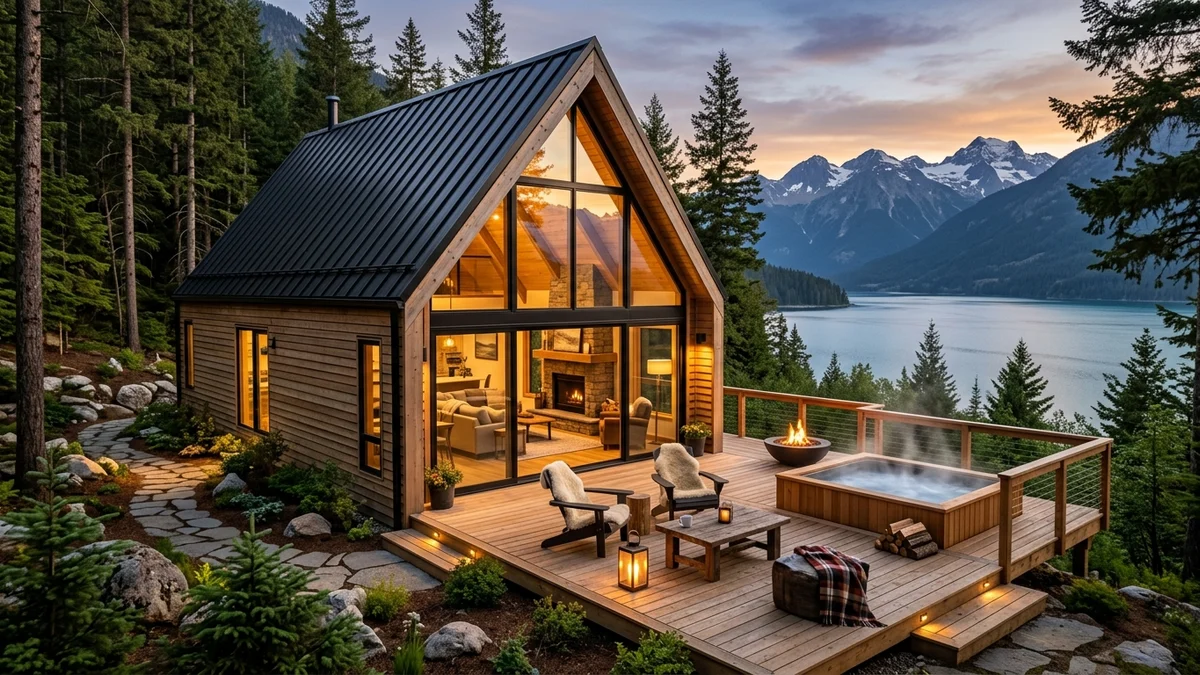
Before you invest tens of thousands of euros into a triangular house, it makes sense to ask: will an A-Frame hold its value, and can that value grow? The short answer is yes, but not because of the building style itself. Property value is shaped by a mix of factors in which the shape of the house is only one part of the story. Location, legal status, year-round usability, and rental potential often matter far more than the architectural silhouette. In this article we break down what raises and what lowers the value of an A-Frame property, and how to protect your capital.
What Raises the Value of an A-Frame Property
The single most powerful factor is almost always location and land. A lakeside plot, a site at the foot of a ski slope, or a parcel surrounded by untouched nature raises value regardless of what house sits on it. Land with a view, good access, and quiet surroundings appreciates even as the building itself ages.
Right behind location comes fully permitted legal status. A house with a valid building and occupancy permit, properly registered and compliant with regulations, sells faster and at a higher price. We cover this in detail in our guide to permits and regulations.
The third pillar of value is year-round usability. Good insulation and reliable heating turn a seasonal cabin into a property that works 365 days a year, widening the pool of buyers and extending the rental season. Alongside this sit build quality and durable materials — standing-seam metal, quality glazing, and glulam timber mean less maintenance and greater buyer confidence.
Finally, the A-Frame has a unique advantage: it is photogenic. The instantly recognisable triangular silhouette performs exceptionally well on short-term rental platforms, which directly lifts both income and appraised value.
What Lowers the Value
There are also factors that pull value down. Unpermitted construction is the biggest risk — a house without permits is hard to sell, cannot be registered, and is often valued at little more than the land beneath it.
An off-grid-only setup shrinks the buyer pool; many buyers want a grid connection for power and water and are not prepared to manage self-sufficient systems. Similarly, poor insulation that limits the house to the summer months reduces both income and price.
A challenge specific to the A-Frame shape is small usable floor area — the steep walls eat into the space where you can stand upright. If the design does not compensate with a smart layout, buyers perceive it as a drawback. Finally, difficult access to the plot (a poor road, long distance) lowers both value and rental appeal.
Factors That Raise vs Lower A-Frame Value
| Raises value | Lowers value |
|---|---|
| Prime location and land | Poor or difficult site access |
| Full permits and registration | Unpermitted construction |
| Year-round usability | Summer-only usability |
| Quality, durable materials | Poor insulation |
| Strong short-term-rental appeal | Off-grid-only supply |
| Proximity to nature, water, or ski | Very small usable floor area |
Rental Income as a Value Driver
Rental income is not just monthly cash flow — it directly shapes how much the property is worth. Investor-buyers value an A-Frame by how much money it can generate, so strong occupancy lifts the resale price too. We explore this further in our rental business guide.
Take a concrete example: a house built for around €35,000, with an average nightly rate of €90 and occupancy of roughly 45%.
| Item | Value |
|---|---|
| Build cost | €35,000 |
| Nightly rate | €90 |
| Occupancy | ~45% (about 164 nights) |
| Gross annual income | ~€14,700 |
| Payback period (gross) | ~5-8 years |
Once the investment is recovered over five to eight years, the house moves into pure-profit territory while still retaining the market value of the building and the land.
Return on Investment Scenarios
There are three core approaches, each with its own return profile:
- Build-to-hold — the house serves personal use and appreciates slowly alongside the land. Lowest risk, slowest cash flow.
- Build-to-rent — the property actively generates income through short-term rental. The best balance of yield and value, with the commitment of managing guests.
- Build-to-sell — the goal is a quick resale at a margin. A distinctive design can command a premium in the right market, but this is a niche play that depends on demand.
It is worth stressing: a distinctive A-Frame design can fetch a higher price, but only where a buyer values that aesthetic. In more conservative markets the premium is smaller.
Practical Tips to Protect Resale Value
To safeguard value, keep your permits and registration in perfect order — it is the first thing a serious buyer or bank checks. Next, preserve year-round usability through quality insulation and a reliable heat source.
Document every upgrade — keep the invoices for the roof, glazing, heating, and solar system so you can prove quality to a buyer. And finally, invest in quality photography; for an A-Frame the visual impression is not cosmetics but a sales argument. Before you build, estimate your budget with our cost guide.
Frequently Asked Questions
Do banks finance A-Frame homes?
Yes, provided the property is legal, registered, and connected to infrastructure. Banks assess risk based on legal status and market saleability, not roof shape. Unpermitted or off-grid-only properties are harder to finance.
Does the small loft floor area hurt appraisal?
Appraisals are based primarily on the usable area where you can stand upright, so the low spaces under the slope do not count as full floor area. A smart layout and a high ridge reduce this effect, but it should be kept in mind at the design stage.
Is an off-grid A-Frame harder to sell?
Generally yes, because it narrows the pool of interested buyers. Many want standard utility connections and are not prepared for self-sufficient systems. An off-grid setup has its own audience, but on average it lengthens the time on market.
Calculate the Value of Your A-Frame Project
The value of an A-Frame property is built through smart decisions at the planning stage — from dimensions and materials to the choice of heating. Use our A-Frame calculator to estimate costs, potential rental income, and return on investment tailored to your location and parameters.
Financing an A-Frame Build: Loans, Budgeting and Costs
How to finance an A-Frame: loan types, down payment, contingency reserve, payment phases, and tips for a realistic budget without nasty surprises.
A-Frame Rental Business: Guide to Profitable Vacation Rentals
Learn how to start a profitable A-Frame vacation rental business. Airbnb strategies, glamping equipment, pricing models, and return on investment.
A-Frame Cabin Rental Business: Complete Guide to Earning Income
How to start a profitable A-Frame cabin rental business: from investment and location to platforms and return on investment.