Financing an A-Frame Build: Loans, Budgeting and Costs
How to finance an A-Frame: loan types, down payment, contingency reserve, payment phases, and tips for a realistic budget without nasty surprises.
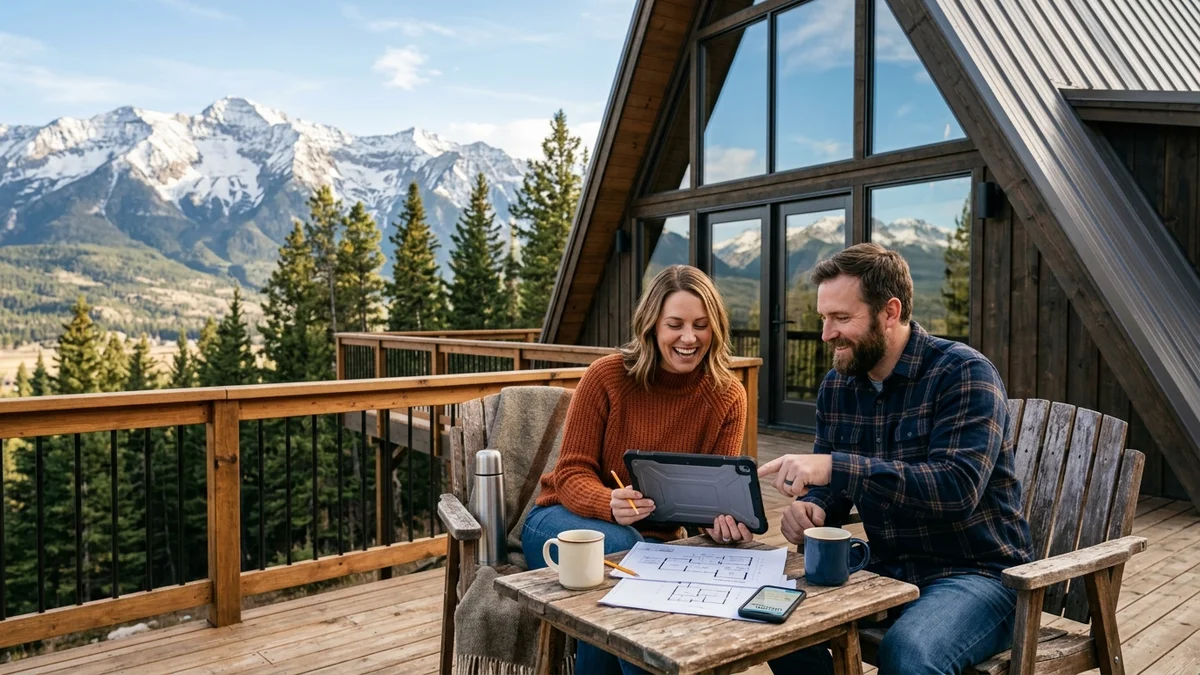
Funding a small, often second or vacation home works differently from taking out a standard mortgage on a primary residence. An A-Frame is usually compact, sometimes on a remote plot or off-grid, and lenders assess it with more caution. That is exactly why the money deserves as much planning as the build itself. This guide walks through the common financing options, how to put together a realistic budget, and how to line up loan drawdowns with the stages of construction. A quick note: this is general, educational content, not personalized financial advice — always talk to your bank or a financial adviser before committing.
Common financing options
There are several ways to fund an A-Frame project, and many owners combine more than one.
Savings and self-funding are the cheapest source because there is no interest and no arrangement fee. For smaller cabins, where the totals are modest, paying from your own funds is often realistic and gives you the most freedom.
A construction loan is drawn in stages as the work progresses. The lender releases money in tranches after each phase is completed, so you pay interest only on the amount drawn. This is the natural fit for building from scratch.
A mortgage or home loan is possible when the property meets the lender's criteria — legal status, utility connections, and a supporting valuation. For a small or seasonal cabin the bank may be more cautious or ask for a larger down payment.
A personal loan suits a small cabin because it is quick to arrange and needs no mortgage charge, though it usually carries a higher rate and a shorter term.
A home-equity loan uses the value of a property you already own as security. It can unlock a larger sum, but you are putting existing property on the line.
It is worth knowing that lenders treat small, seasonal, or off-grid cabins cautiously — they may want a bigger deposit, a shorter term, or more paperwork. A realistic view of property value helps the conversation with your bank.
Building a realistic budget
A good budget covers every line item, not just the price of materials. The main cost groups are: land, design and permits, foundation, the shell (frame and roof), utilities, interior finishing, and furnishings.
One rule matters above all: always add a contingency reserve of about 10-20% of the total. Poor ground, a design change, or a jump in material prices can easily swallow a thin reserve. For a detailed breakdown of each line item, see the guide to construction costs.
Payment phases in a build
Money does not leave your account all at once during a build; it goes out in stages. A typical sequence is: deposit, foundation, structure (the shell), weathertight stage, and finishing. If you use a construction loan, line up the drawdowns with these phases so each slice of money arrives exactly when it is needed for the next step.
Matching drawdowns to phases keeps interest down — you only pay on what you have drawn — and stops you running short halfway through the build.
A rough budget split
The table below shows a typical share for each line item within the total budget. The figures are indicative and depend on your location and material choices.
| Budget line item | Typical share (%) | Note |
|---|---|---|
| Land | varies widely | Depends on region; may already be owned |
| Design and permits | 3-6% | Documentation, approvals |
| Foundation | 8-12% | Lower for a lighter A-Frame structure |
| Structure (frame and roof) | 25-35% | The single largest item |
| Utilities (power, water, heating) | 10-15% | Higher for off-grid setups |
| Interior and finishing | 20-30% | Floors, cladding, kitchen, bathroom |
| Contingency reserve | 10-20% | Leave untouched unless truly needed |
Tips to keep costs under control
A few habits protect the budget significantly. First, lock the design early — mid-build changes are the most expensive source of overruns. Second, get itemized quotes (line by line) from several builders so you know exactly what you are paying for. Ready-made prefab kits can also make costs more predictable.
Avoid changes once building has started, because every change pulls in new materials and lost time. Consider phasing if money is tight — you can move in at a basic stage and finish later. And above all: do not raid the contingency for "upgrades"; keep it for genuine surprises.
The rental angle
If you plan to rent the A-Frame out, projected income can support the budget and ease loan repayments. A realistic estimate of occupancy and nightly rate shows how quickly the investment pays back. For more on turning the cabin into a source of income, read the piece on running a rental business. Lenders sometimes factor in expected income, but usually want a conservative estimate.
Frequently asked questions
Can I get a mortgage for a small A-Frame cabin?
It is possible, but it depends on the lender and the property. A legal building with utility connections and clean paperwork is easier to finance. For small, seasonal, or off-grid cabins the bank may ask for a larger down payment or offer a shorter term. It pays to check the criteria with a few lenders in advance.
How big a contingency should I keep?
As a general rule, plan for about 10-20% of the total budget. For simpler projects on known ground, the lower end is usually enough, while remote plots, difficult terrain, or older documentation are reasons to stay closer to the higher end.
Should I build in phases if money is tight?
Phased building is a legitimate strategy. You bring the cabin to a move-in state and add finishing and furnishings later as funds arrive. This reduces the loan you need up front, though some work can cost more when done after the fact.
Plan your budget today
A realistic budget starts with accurate numbers. Our A-Frame calculator automatically breaks down every line item based on your dimensions, materials, and location, so you can see how much needs financing and how large a reserve to leave. The cost guide offers extra help. Start with the calculator, then take clear numbers to your bank or financial adviser.
A-Frame Property Value: Resale and Return on Investment
Does an A-Frame hold its value? An analysis of the factors driving resale price, rental yield, and long-term return on a triangular house.
A-Frame Rental Business: Guide to Profitable Vacation Rentals
Learn how to start a profitable A-Frame vacation rental business. Airbnb strategies, glamping equipment, pricing models, and return on investment.
A-Frame Cabin Rental Business: Complete Guide to Earning Income
How to start a profitable A-Frame cabin rental business: from investment and location to platforms and return on investment.