A-Frame Micro-Resort: A Cabin Cluster as a Business
How to turn a handful of A-Frame cabins into a profitable micro-resort: site layout, shared amenities, build phasing, and revenue projections.
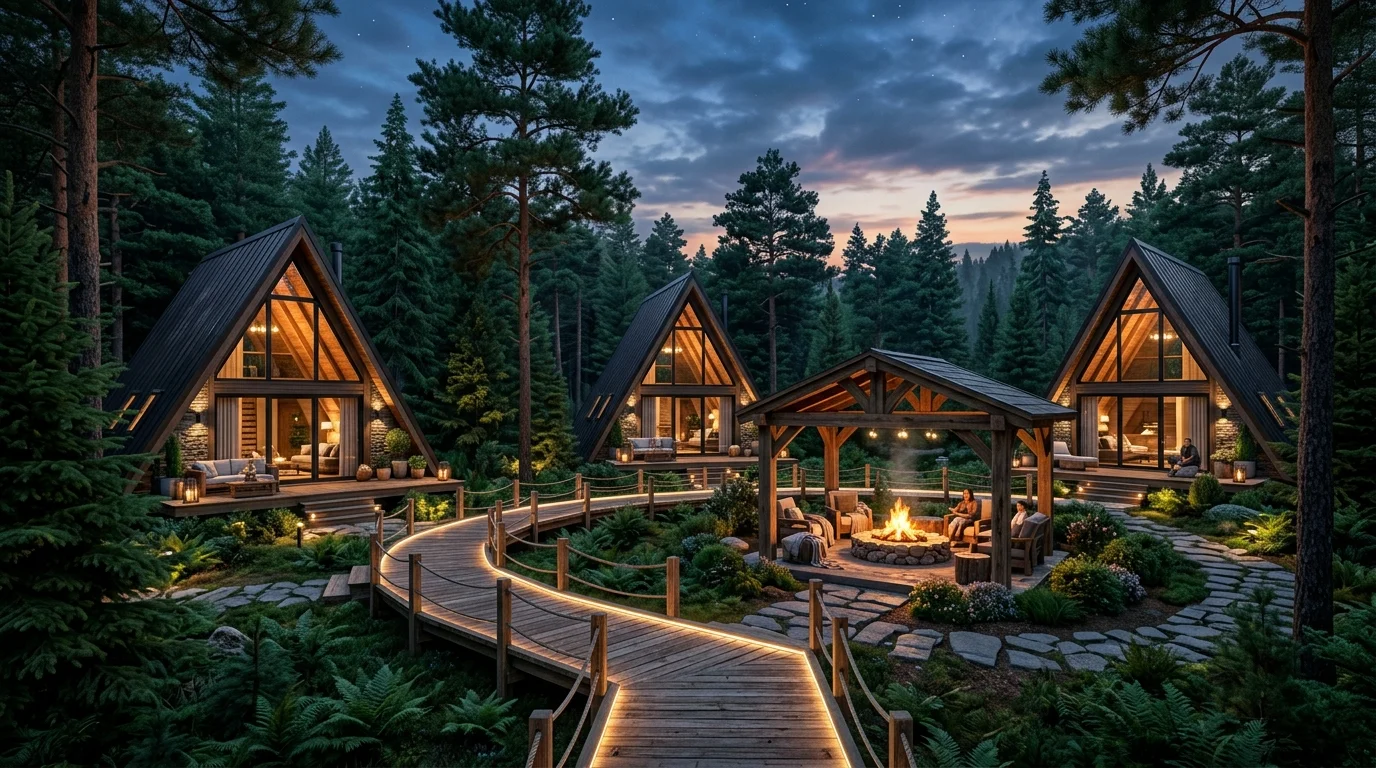
A single A-Frame cabin is a lovely weekend escape. A small cluster of them is a business. By grouping three to six triangular cabins on one scenic plot, you create a photogenic micro-resort that is fast to build, easy to run, and remarkably bookable. Guests love the distinctive silhouette, the steep roof framing a forest or lake view, and the sense of having their own private hideaway just steps from a shared fire pit. For the owner, the modular nature of the model means you can start small, prove the concept, and grow at your own pace.
This guide walks through the numbers and the practical decisions behind a profitable A-Frame micro-resort, from site layout to daily operations.
Why A-Frame for a micro-resort
The A-Frame form is a natural fit for hospitality, and several traits make it especially strong as the building block of a cluster.
Illuminated timber boardwalks connecting boutique cabins around a central firepit
Quick, modular construction. A compact cabin uses a simple, repeatable frame. Once you have a design that works, each additional unit is faster and cheaper to build than the last, and crews get quicker with every repetition.
Strong short-term-rental demand. The A-Frame is one of the most-saved accommodation styles on booking and social platforms. That visibility translates directly into bookings and lets you charge a premium over a plain cabin. If you are new to hosting, our Airbnb rental solution covers the fundamentals.
Low maintenance. The steep roof sheds rain and snow, there is very little vertical wall to weather, and compact interiors are quick to clean and service. Fewer repairs mean more nights available for guests.
Distinctive brand identity. A row of matching triangular cabins is instantly recognizable. That coherent look becomes your logo, your hero photo, and your word-of-mouth story all at once.
Site layout and privacy
A cluster succeeds or fails on how it feels to stay in. The goal is for every guest to feel secluded while shared amenities remain a short, pleasant walk away.
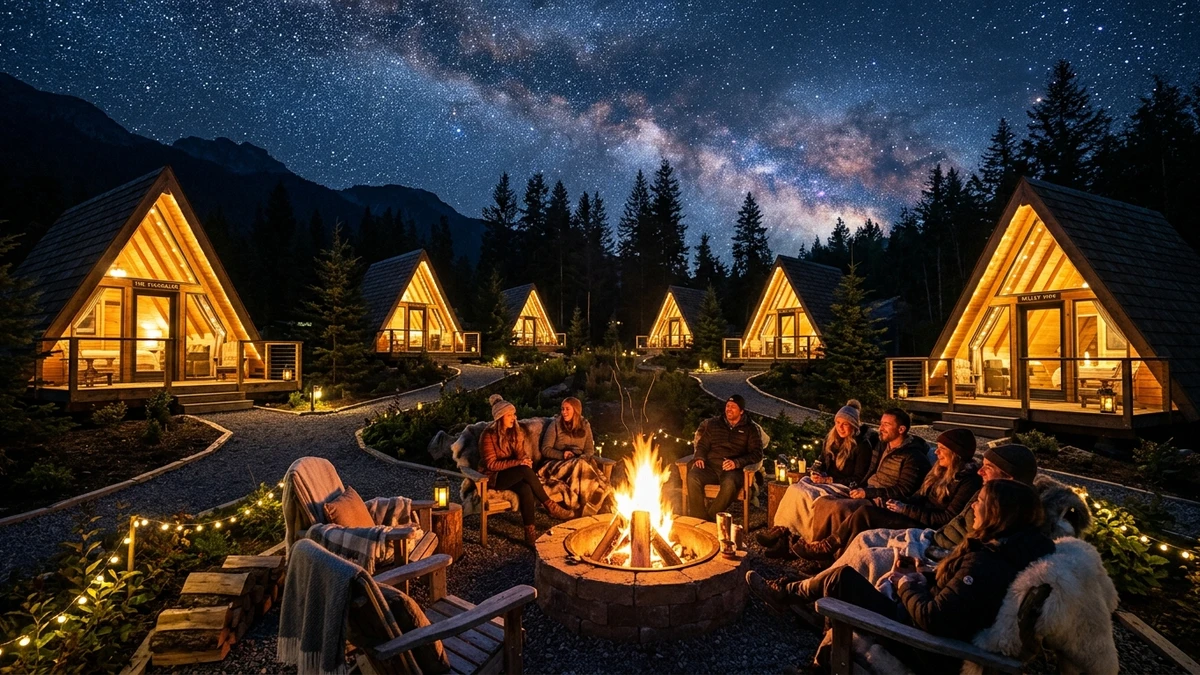 Luxury boutique cabin interior with cozy furnishings and panoramic view
Space the cabins 15-25 m apart and stagger them so no window looks directly into a neighbour. Orient each unit toward the best feature on the plot: the sunset, the tree line, the water. Even a few degrees of rotation can turn an ordinary cabin into the one guests photograph.
Keep the private cabins in one zone and the shared amenities, parking, and reception in another. Guests arrive, park once, check in, and then experience the cabin area as a calm, car-free retreat. Use gravel paths, low planting, and simple lighting to guide movement without floodlighting the night sky, which is often part of the appeal.
Recommended configuration
The table below is a solid starting point for a first cluster that one owner-operator can manage.
| Parameter | Recommendation |
|---|---|
| Number of units | 3-6 |
| Floor area per unit | 20-35 m² |
| Sleeping capacity per unit | 2-4 guests |
| Spacing between units | 15-25 m |
| Reception / check-in | 1 shared point |
| Wellness feature | Sauna or hot tub |
| Social feature | Central fire pit |
| Parking | 1 space per unit |
| Total plot area | 2,000-5,000 m² |
Three units is enough to test the market; four to six lets you smooth out seasonality and justify shared amenities like a sauna.
Investment and revenue
The figures below model a four-unit cluster. Treat them as planning ranges and refine them for your region with the calculator.
| Item | Amount |
|---|---|
| Build cost per unit (20-35 m²) | €25,000 - 45,000 |
| Shared amenities (sauna/hot tub, reception, fire pit) | €20,000 - 35,000 |
| Infrastructure (paths, parking, utilities) | €10,000 - 20,000 |
| Total for 4 units | €150,000 - 235,000 |
| Scenario | Nightly rate | Occupancy | Annual revenue (4 units) |
|---|---|---|---|
| Conservative | €90 | 40% | €52,560 |
| Realistic | €110 | 50% | €80,300 |
| Optimistic | €140 | 55% | €112,420 |
After cleaning, platform fees, utilities, and upkeep, a realistic cluster keeps a healthy operating margin. For a small cluster including modest land costs, expect a payback period of roughly 5-8 years, with the earlier end achievable in strong tourist regions and higher occupancy.
Phased approach
You do not need to build everything at once. Start with two units and a basic shared area. Once they are booking well and you understand your true operating costs, reinvest the profits into a third and fourth cabin. This phased path keeps your initial risk low, lets you refine the cabin design before you repeat it, and spreads the construction spend across seasons. The rental business guide has more on scaling responsibly.
Operations
A tidy micro-resort almost runs itself, but the systems behind it matter.
Turnover is the daily rhythm: a reliable cleaning routine between guests keeps reviews high and same-day check-ins possible. List across several booking platforms and keep calendars synced to avoid double bookings. Lean on self-check-in with smart locks and simple automation so guests arrive on their own schedule and you are not tied to the gate; our smart-home article covers the setup. Finish with the small touches, a welcome note, local coffee, a guide to nearby trails, that turn a one-time stay into a returning guest.
Regulations
Rules for tourist accommodation vary widely by location. You will likely need tourism or short-stay licensing, and your plot must be zoned to allow it. Fire safety, wastewater, and guest registration requirements also differ from place to place. Always confirm the specifics with your local authorities before you build, and factor any permit timelines into your phased plan.
Getting Started
- Define your budget and decide how many units you can fund for phase one.
- Secure a scenic plot with good access and tourism-friendly zoning.
- Model your units and shared amenities in the calculator to firm up costs.
- Check permits for tourist accommodation and zoning with local authorities.
- Build phase one — two units and a simple shared area.
- List on platforms and refine pricing before reinvesting in more cabins.
Frequently Asked Questions
How many cabins do I need to make it worthwhile?
Two units can cover their costs and prove demand, but three to four is the sweet spot for a solo operator. At that size the shared amenities pay off, occupancy risk is spread across more cabins, and the revenue is enough to justify the effort without needing staff.
Do I need separate permits for each unit?
Usually the site is permitted as a whole rather than cabin by cabin, but this depends entirely on local rules. Some regions treat each accommodation unit separately, especially above a certain count. Confirm with your municipality before finalizing the layout.
How do I manage bookings across several cabins?
Use a channel manager or a platform that syncs calendars across Airbnb, Booking.com, and your own site so availability updates everywhere at once. Combined with smart locks and a fixed cleaning schedule, one person can comfortably run a four-unit cluster.
Start Planning Your Micro-Resort
An A-Frame cluster turns a proven cabin design into a scalable hospitality business. Model your units, price your build, and see the numbers for your own plot.
Calculate your cluster costs →
Related reading:
A-Frame Property Value: Resale and Return on Investment
Does an A-Frame hold its value? An analysis of the factors driving resale price, rental yield, and long-term return on a triangular house.
Financing an A-Frame Build: Loans, Budgeting and Costs
How to finance an A-Frame: loan types, down payment, contingency reserve, payment phases, and tips for a realistic budget without nasty surprises.
A-Frame Rental Business: Guide to Profitable Vacation Rentals
Learn how to start a profitable A-Frame vacation rental business. Airbnb strategies, glamping equipment, pricing models, and return on investment.