A-Frame Outdoor Lighting: Atmosphere and Safety After Dark
How to light an A-Frame from outside: facade uplighting, pathways, deck, security lighting, and solar options for off-grid cabins.
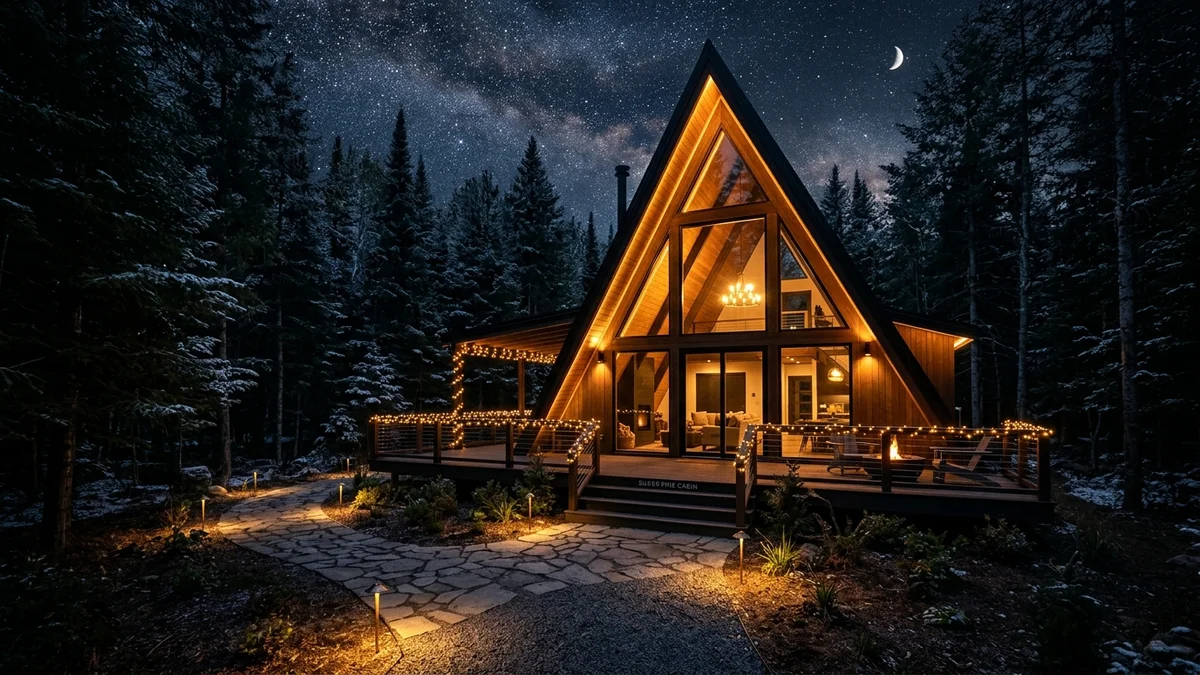
When you own or plan to build an A-Frame cabin, you quickly realize that its striking architectural design is only half the story. The way you illuminate your property after the sun goes down plays a crucial role in both the aesthetics and the functionality of your home. Good exterior lighting makes an A-Frame magical at night, transforming its steep rooflines and large glass facades into a glowing beacon in the wilderness. At the same time, proper illumination keeps it safe, deterring unwanted visitors and preventing accidental trips or falls in the dark. Designing the right lighting scheme requires a balance between creating a warm, inviting atmosphere and ensuring practical visibility. Whether your cabin is nestled deep in a forest or perched on a mountainside, a well-planned outdoor lighting strategy is essential.
Elevating the Architecture with Facade Uplighting
One of the most defining features of an A-Frame house is its iconic triangular shape and steep, sloping roof. To highlight this unique geometry, facade uplighting is a remarkably effective technique. By placing low-voltage LED ground fixtures at the base of the cabin and angling the light upwards along the steep slopes, you can create a dramatic and visually stunning effect. These fixtures draw the eye upward, emphasizing the height and structural elegance of the building.
When choosing uplights, it is important to select fixtures that are robust and weather-resistant, ideally with an IP65 or higher rating to withstand rain, snow, and dirt. Positioning the lights correctly is key; you want to skim the surface of the roof or the front facade without causing glare through the windows. The subtle glow not only enhances the cabin's nighttime curb appeal but also provides ambient light that softly illuminates the surrounding area, making the transition from the dark outdoors to the bright indoors feel much smoother.
Navigating Safely with Path and Driveway Lighting
A dark, uneven path leading to your cabin can be hazardous, especially in rural or off-grid locations where streetlights are nonexistent. Path and driveway lighting are critical components of your outdoor safety strategy. Installing low bollards or recessed ground lights along walkways ensures that every step is clearly visible. These fixtures should cast light downward, illuminating the ground rather than shining into the eyes of those walking by.
For driveways, sturdy, drive-over rated recessed lights or strategically placed post lights can guide vehicles safely to the parking area. It is vital to space these lights evenly to avoid alternating patches of blinding light and deep shadow. When integrated thoughtfully, path lighting not only prevents accidents but also acts as a welcoming guide for guests arriving after dark. You can learn more about planning your electrical layout in our comprehensive electrical guide to ensure all outdoor wiring is safely routed.
Creating a Cozy Deck and Terrace Experience
The deck or terrace of an A-Frame is often the primary outdoor living space, serving as an extension of the interior. To make this area usable and comfortable at night, a layered lighting approach is best. String lights draped across the deck railing or suspended from the eaves can instantly create a festive, cozy ambiance perfect for evening relaxation.
In addition to decorative string lights, overhead fixtures installed beneath the roof overhang can provide functional illumination for dining or reading. Do not forget about step lights; installing small, subtle fixtures directly into the risers of your deck stairs is a smart way to prevent missteps. By combining these different types of lighting, you can easily adjust the mood from a bright, lively gathering space to a soft, romantic retreat. For modern setups, integrating these lights with automated controls can be highly beneficial, a topic we explore further in our article on smart home features.
Prioritizing Security with Motion-Sensor Lights
For remote cabins, security is often a top concern. The isolation that makes an A-Frame so appealing also makes it vulnerable if left completely dark. Security and motion-sensor lights are indispensable for remote properties, acting as both a deterrent to intruders and a convenience for you.
When a motion sensor detects movement, it instantly floods the area with bright light, startling potential trespassers and alerting you to activity outside. It is best to install these lights at key entry points, such as the front door, back deck, and near the driveway or garage. Modern motion-sensor lights can be easily integrated with a smart home system, allowing you to receive notifications on your phone whenever they are triggered. This adds an invaluable layer of peace of mind when you are away from the property.
Exploring Solar Options for Off-Grid Locations
Many A-Frame cabins are built in remote, off-grid locations where trenching traditional electrical wires can be prohibitively expensive or physically impossible. In these scenarios, solar-powered lighting options are an excellent alternative. Today's solar technology has advanced significantly, offering reliable and bright illumination without the need for a grid connection.
Solar path lights can be simply staked into the ground along walkways, absorbing sunlight during the day and automatically turning on at dusk. For more critical areas, solar security lights with built-in batteries and motion sensors provide robust performance. When utilizing solar options, placement is crucial; the solar panels must receive adequate direct sunlight to fully charge the batteries. For a broader look at powering a remote cabin, check out our insights on solar panels and comprehensive off-grid living solutions.
Practical Tips for the Best Results
Achieving the perfect outdoor lighting scheme requires attention to detail. First and foremost, aim for a warm white color temperature, typically between 2700K and 3000K. This range produces a soft, inviting glow that complements the natural surroundings, unlike harsh, blue-toned cool white lights.
It is also crucial to minimize upward light pollution. Many rural areas pride themselves on their dark skies and starry nights; poorly aimed floodlights can ruin this experience. Always use shielded fixtures that direct light exactly where it is needed. Furthermore, ensure all your outdoor fittings have an IP65+ rating, guaranteeing they are fully protected against dust and low-pressure water jets. Finally, always opt for low-voltage LED fixtures, which are highly energy-efficient and safer to install outdoors.
Outdoor Lighting Costs and Applications
Understanding the different types of fixtures and their typical applications will help you budget effectively for your project.
| Lighting Type | Location | Purpose | Approx. Cost in € |
|---|---|---|---|
| Low-Voltage LED Uplights | Base of facade | Highlight architectural shape | 40 - 80 € per unit |
| Bollard Lights | Walkways and paths | Safe navigation | 60 - 120 € per unit |
| String Lights | Deck or terrace railing | Decorative ambiance | 30 - 70 € per set |
| Motion-Sensor Floodlights | Entry doors and driveways | Security and convenience | 50 - 150 € per unit |
| Solar Path Lights | Garden and remote paths | Off-grid path illumination | 15 - 35 € per unit |
FAQ
What colour temperature is best for a cosy A-Frame exterior?
A warm white colour temperature between 2700K and 3000K is ideal for a cosy A-Frame exterior. It provides a soft, welcoming glow that complements wood materials and the natural environment without being harsh or glaring.
Can I use solar lights at a remote cabin in the woods?
Yes, you can absolutely use solar lights at a remote cabin, provided they are placed in areas that receive sufficient direct sunlight during the day. For densely shaded forest locations, you might need solar models with remote panels that can be positioned in sunnier spots.
Do I need special outdoor-rated fittings for my cabin?
Yes, all exterior lighting fixtures must be explicitly rated for outdoor use. You should look for fittings with an IP65 or higher rating to ensure they are fully protected against rain, snow, dust, and general weather exposure.
Plan Your Perfect Cabin
Great lighting is just one part of creating the ultimate A-Frame retreat. Whether you are finalizing your design or just starting to dream, getting a clear picture of your budget and materials is the next big step. Try out our interactive tools to estimate costs and explore configurations. Build and estimate your cabin today with our A-Frame calculator.
Smart A-Frame Home: Automation and IoT for Your Cabin
How to fit an A-Frame with smart systems: remote heating, security, humidity sensors, and energy monitoring for a home that isn't used every day.
An A-Frame Acoustics Guide
A good A-frame guide starts with observation, not a universal prescription. Consider a lively dinner turning into an exhausting conversation under an open roof volume. The cabin’s location…
The Dog-Friendly A-Frame Retreat
A useful A-frame solution begins with a real weekend scenario, not a theme. Imagine a dog coming inside with wet paws while people are unloading for the weekend. The cabin has to make that…