A-Frame House Heating: Systems, Costs and Efficiency
Compare heat pumps, wood stoves, underfloor and electric heating for A-Frame houses. Installation costs, COP ratings and suitability for triangular geometry.
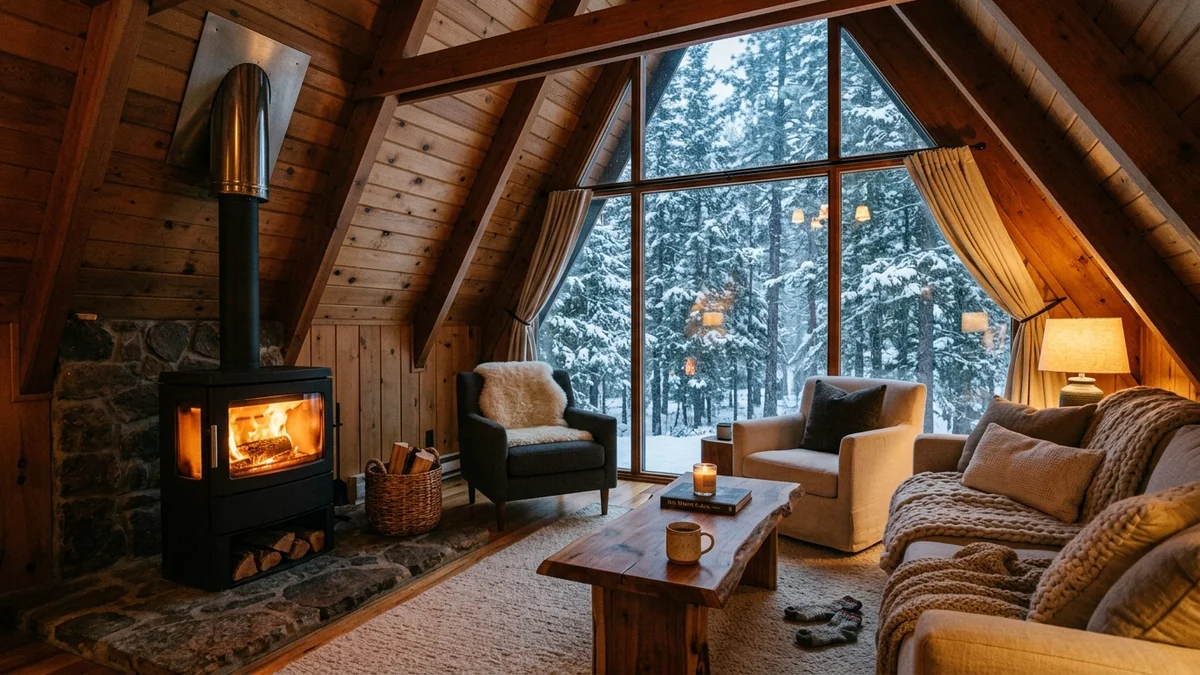
Choosing a heating system for an A-Frame house requires a specialized approach due to the unique triangular geometry of this construction type. The steeply angled roof panels extending from the foundation to the peak create a specific warm air dynamic, where heat naturally rises toward the apex and accumulates in rarely used upper space. An efficient heating system for an A-Frame house must account for this vertical heat distribution and ensure even warming of the living space at ground level.
Heat Pumps for A-Frame Houses: The Most Efficient Choice
Heat pumps represent the most efficient heating system for A-Frame houses, with COP values (coefficient of performance) ranging from 3.5 to 4.8 in modern air-to-water models. This means that for every 1 kWh of electrical energy consumed, the heat pump produces 3.5 to 4.8 kWh of thermal energy. For a typical 80 m² A-Frame house, annual heating costs with a heat pump amount to €600-900, compared to €1,800-2,400 for direct electric heating.
Installation of an air-to-water heat pump for an A-Frame house costs €8,000-12,000 including the indoor unit, outdoor unit, and connection to the heat distribution system. The outdoor unit is placed on a concrete pad beside the A-Frame foundation, at a minimum distance of 3 meters from sleeping areas due to compressor noise (35-45 dB at 3 m distance).
For A-Frame houses in mountainous regions where temperatures drop below -15°C, ground-source heat pumps with geothermal probes are recommended. Installation costs are higher (€15,000-22,000), but the COP remains stable at 4.0-4.5 even during extreme outdoor temperatures. Geothermal probes are drilled to depths of 80-120 meters beside the A-Frame foundation.
Wood Stoves: Traditional Solution for A-Frame Geometry
Wood stoves are an extremely popular choice for A-Frame houses, particularly for weekend retreats and homes in rural areas with access to affordable firewood. A modern wood stove rated at 8-12 kW can heat a 60-90 m² A-Frame house as the primary heat source. Efficiency of contemporary stoves reaches 75-85%, a significant improvement over older models with 40-50% efficiency.
The cost of a quality wood stove for an A-Frame house ranges from €1,500 to €4,000, plus €800-1,500 for the chimney and installation. The chimney in an A-Frame construction passes through the roof structure at a steep angle, requiring special fire-rated penetrations with a minimum clearance of 50 mm between the chimney and timber structure, filled with non-combustible insulation.
Positioning the stove within an A-Frame house is critical for efficient heat distribution. The optimal position is in the central area of the ground floor, where radiant heat directly warms the living space. A stove placed against a sloped roof panel loses some heat through warming the roof structure rather than the interior space. Annual firewood consumption for an 80 m² A-Frame house is 5-8 stacked cubic meters (3,500-5,600 kg), costing €400-800 depending on the region.
Underfloor Heating: Ideal for A-Frame Construction
Underfloor heating is particularly well-suited for A-Frame houses because it solves the problem of vertical heat stratification. Heat is evenly distributed from the floor upward, warming the living space at the level where people actually are, rather than accumulating under the roof peak. A floor temperature of 24-28°C creates a comfortable climate at heights of 0-2 meters, while the temperature at 5-6 meters height (the A-Frame peak) remains only 2-3°C higher.
Hydronic underfloor heating for an 80 m² A-Frame house costs €4,000-6,500 for materials and installation. The system consists of PE-RT pipes with 16-20 mm diameter laid in a cement screed 65-75 mm thick, with pipe spacing of 100-150 mm depending on the room's heat loss. The water temperature in the system is low (35-45°C), making it an ideal partner for heat pumps that achieve their highest COP at low flow temperatures.
Electric underfloor heating is a cheaper installation alternative (€2,000-3,500 for 80 m²) but has significantly higher operating costs. Heating cables rated at 100-150 W/m² consume 8,000-12,000 kWh annually for an 80 m² A-Frame house, which at an electricity price of €0.15/kWh amounts to €1,200-1,800 per year. Electric underfloor heating makes sense only for A-Frame houses used occasionally (weekend homes) where the low investment compensates for higher operating costs.
Electric Heating: Simple but Expensive Solution
Direct electric heating (convectors, infrared panels, storage heaters) represents the simplest system to install in A-Frame houses but also the most expensive to operate. Installation of electric convectors for an 80 m² A-Frame house costs just €1,500-3,000, but annual heating costs reach €1,800-2,400 with average consumption of 12,000-16,000 kWh.
Infrared panels are an interesting option for A-Frame houses because they heat surfaces (floor, furniture, people) directly without heating the air that rises toward the triangle peak. A panel rated at 600-800 W mounted at 2.5 meters height covers an area of 8-12 m². For an 80 m² A-Frame house, 8-10 panels with a total output of 5-7 kW are needed, with installation costs of €3,000-5,000.
Storage heaters use cheaper night-rate electricity (€0.08-0.10/kWh) to heat ceramic blocks that release warmth during the day. For an 80 m² A-Frame house, a total capacity of 10-14 kW of storage heaters is needed, costing €3,500-6,000. However, temperature regulation is limited — once charged, the heaters release heat regardless of current needs.
Combined Heating Systems for A-Frame Houses
The optimal solution for many A-Frame houses is a combination of two heating systems. The most popular combination is a heat pump with underfloor heating as the primary system, supplemented by a wood stove for extremely cold days and for ambiance. The heat pump covers 80-90% of annual heating needs, while the wood stove takes over during periods when outdoor temperatures fall below the heat pump's operating range (-15°C to -20°C).
Another popular combination for A-Frame weekend houses is a wood stove as the primary source with electric underfloor heating in the bathroom and bedrooms. Total investment amounts to €4,000-7,000, with operating costs of €600-1,000 annually (firewood plus electricity for underfloor heating).
For A-Frame houses with solar panels, electric heating becomes economically viable as excess solar energy is used for heating rather than being sold to the grid at low feed-in tariffs. A 6 kWp solar panel system on the south-facing A-Frame roof produces 6,000-7,500 kWh annually, covering 40-60% of heating needs.
Conclusion
The choice of heating system for an A-Frame house depends on usage patterns, location, and budget. For permanently occupied A-Frame houses, the combination of a heat pump and underfloor heating provides the best balance of efficiency and comfort with annual costs of €600-900. For weekend A-Frame houses, a wood stove with supplementary electric heating offers lower initial investment with acceptable operating costs.
For precise heating system sizing and cost calculations for your A-Frame project, use our A-Frame Calculator. Also check out our article on A-Frame insulation and energy efficiency as quality insulation directly reduces heating requirements and operating costs.
A-Frame vs Conventional House: A Head-to-Head Comparison
A-Frame or a conventional house? We compare cost, build speed, usable space, energy efficiency, maintenance, and resale to help you decide.
A-Frame House Windows and Lighting: Natural Light Guide
Learn how to position windows on an A-Frame house for maximum natural light. Gable windows, skylights, and energy efficiency strategies explained.
A-Frame Insulation: A Guide to Thermal Protection
Complete insulation of an A-Frame roof and floor: material types, thicknesses, vapour control, thermal bridges, and airtightness for seasonal and year-round cabins.