Designing an A-Frame for Quiet Mornings
A weekend cabin is at its best when an ordinary moment becomes easier to enjoy. For this topic, that moment is the first person awake making coffee while others are still asleep nearby. It…
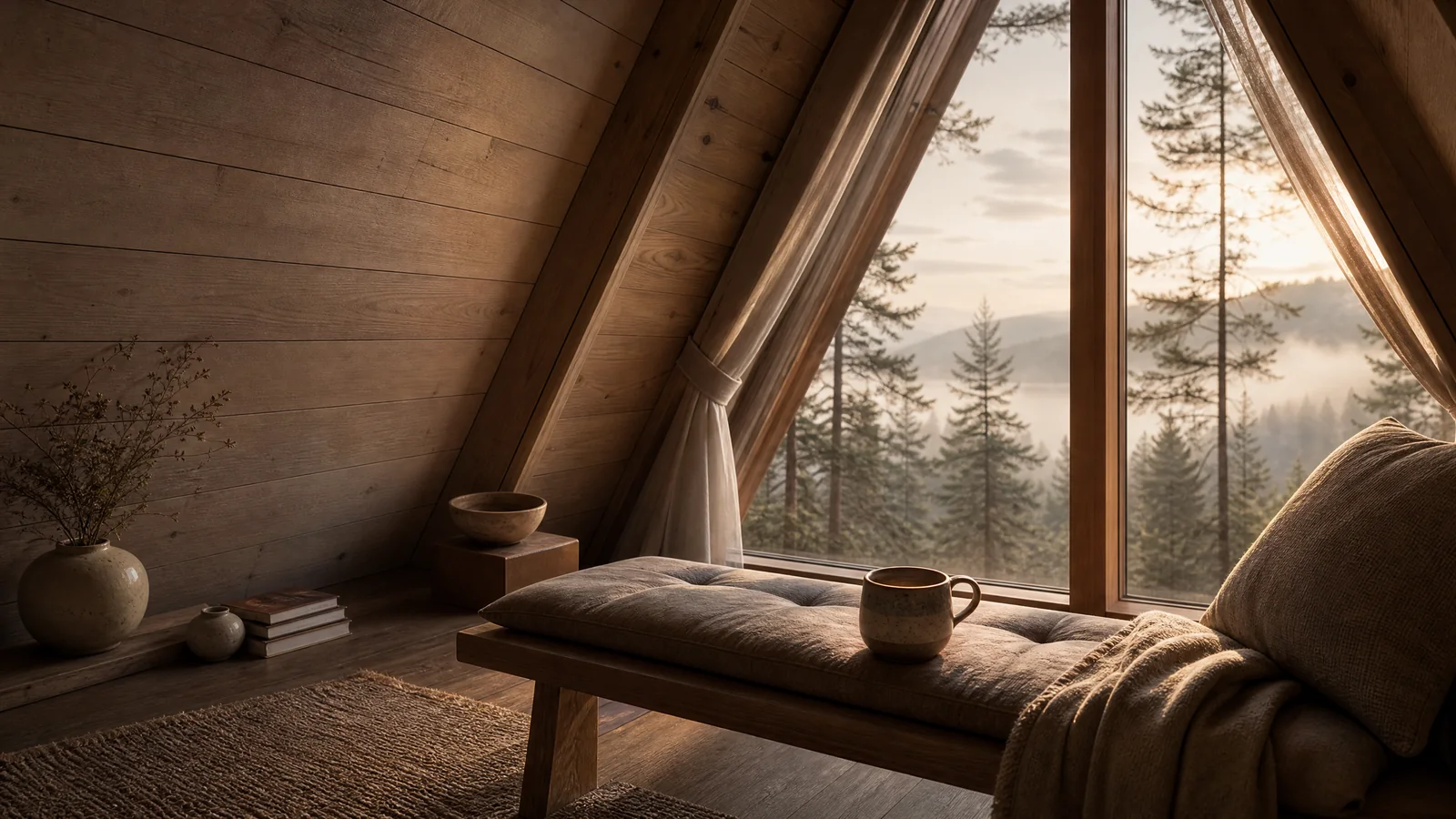
A weekend cabin is at its best when an ordinary moment becomes easier to enjoy. For this topic, that moment is the first person awake making coffee while others are still asleep nearby. It is tempting to solve it with more objects, more furniture or a dramatic feature. In a compact A-frame, the better answer is usually a small sequence that makes the next action obvious.
The idea is not to make cabin life look staged. It is to give repeated actions a useful place, a clear route and enough visual calm. When the layout supports the way people really arrive, rest, work or head outdoors, the building feels more generous than its footprint suggests.
Start with the real moment
Begin by observing the first person awake making coffee while others are still asleep nearby. Use the cabin as it is for one weekend and resist the urge to solve every inconvenience immediately. Watch what people carry, where they pause, which surface collects clutter and which route becomes crowded. These details are more useful than a catalogue image because they reveal the movement the space must support.
A helpful question is: what should feel effortless here? Once that answer is clear, choose only one or two changes that strengthen it. The point is not to eliminate every trace of daily life; it is to reduce the small decisions that make a short stay feel rushed.
Give one zone a clear job
For this article, the most useful starting point is a low-noise coffee point, soft textile surfaces, a dim path light and one view-facing seat. A zone works when its purpose is visible without instructions. It can be modest: a bench that is actually deep enough to sit on, a basket that holds the things people bring, or a lamp that makes the evening route clear.
Keep the boundary readable. In an A-frame, angled walls and open sightlines make clutter travel quickly through the room. A defined zone allows the rest of the cabin to stay open. It also makes it easier to notice when a storage idea is not doing its job.
 A practical A-frame cabin detail supporting everyday weekend life
Build a repeatable rhythm
A good routine for this topic is simple: prepare cups and breakfast basics the night before. The best cabin rituals are short enough to survive tired arrivals, wet weather and a house full of guests. They work because no one has to remember an elaborate sequence.
Try assigning each repeated item a visible home. Put the things needed first near the point of use, and move the things used less often farther away. This small hierarchy keeps a compact cabin from becoming a collection of temporary piles.
| Moment | What to notice | A practical response |
|---|---|---|
| First use | Where does the first item land? | Add a deliberate landing place near that movement. |
| Busy period | Which route becomes crowded? | Keep that route clear and move optional items away. |
| Reset | What stays out after everyone is tired? | Make the return location easy to reach and easy to see. |
| Next visit | What did people search for? | Store that essential closer to the point of use. |
Use comfort as a design tool
Comfort is often more specific than extra decoration. It can mean a dry place for a coat, a chair that faces the best view, light that does not wake everyone, or a surface that can be wiped after a busy meal. The details should respond to the actual activity rather than to a generic image of cabin life.
Choose materials and objects that tolerate the rhythm you expect. If a zone will see wet shoes, art supplies, children’s bags or food prep, make cleaning and resetting part of the decision. A beautiful surface that makes ordinary use stressful is not serving the weekend.
Avoid the common trap
The common mistake is assuming a beautiful view matters more than the sounds that travel through a compact volume. This usually happens when a solution is chosen before the routine is understood. It can make the room look finished while leaving the real friction untouched.
Instead, test a temporary version. Use a movable hook rail, a basket, a folding surface or a lamp in the proposed location. A temporary trial reveals whether the route is natural and whether the item remains useful after the novelty fades.
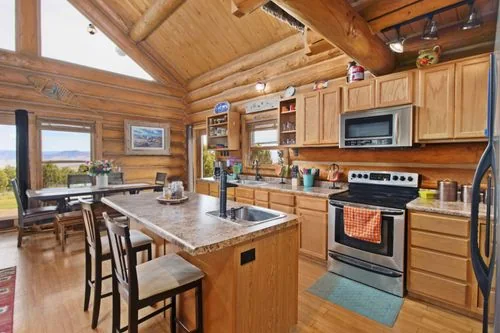 A calm A-frame interior arranged around a simple daily ritual
Let the outside and inside support each other
A-frame life does not stop at the glass. The path, deck, edge of the clearing and view all shape the way the interior is used. Keep the connection practical: provide a place to pause before entering, a way to look out without rearranging furniture, and an easy transition when weather changes.
The aim is not to control the landscape. It is to make the cabin a respectful base for enjoying it. When the outside route and indoor reset work together, even a small building can feel composed through a full weekend.
First next step
For the next visit, wake early once, use the cabin normally, and notice which sounds or lights disturb the room. Write down only one friction point and make one modest change in response. Repeat that cycle before buying larger furniture or committing to built-in storage. The best A-frame improvement is often the one that makes a familiar moment quietly easier.
Smart A-Frame Home: Automation and IoT for Your Cabin
How to fit an A-Frame with smart systems: remote heating, security, humidity sensors, and energy monitoring for a home that isn't used every day.
An A-Frame Acoustics Guide
A good A-frame guide starts with observation, not a universal prescription. Consider a lively dinner turning into an exhausting conversation under an open roof volume. The cabin’s location…
The Dog-Friendly A-Frame Retreat
A useful A-frame solution begins with a real weekend scenario, not a theme. Imagine a dog coming inside with wet paws while people are unloading for the weekend. The cabin has to make that…