The 24-Hour A-Frame Reset: A Weekend Ritual That Makes Your Cabin Feel Like Home
Turn one quiet day away into a meaningful A-Frame reset. Discover the arrival, evening, morning, and closing rituals that make a small cabin feel deeply restorative.
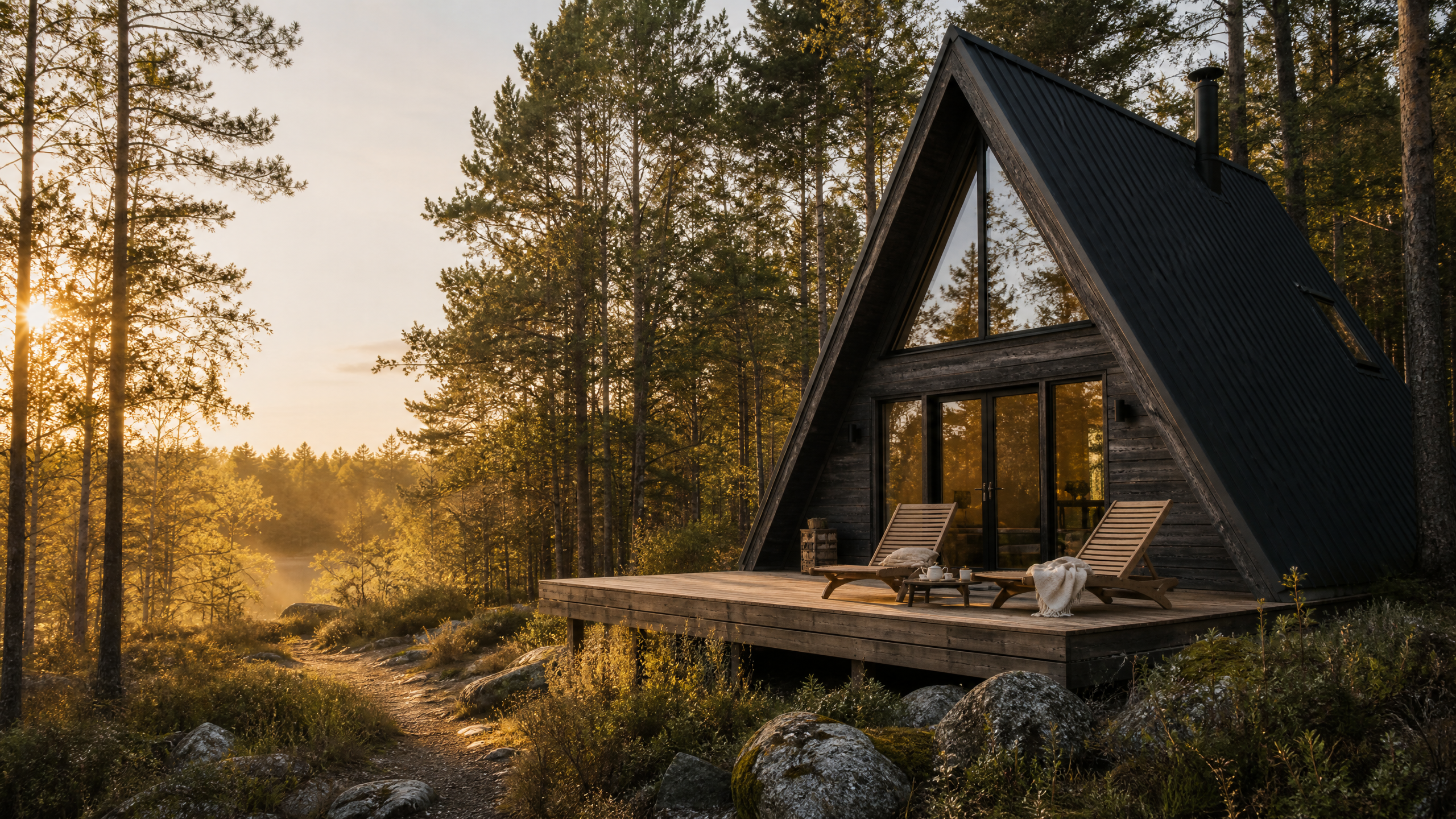
A weekend in an A-frame can be a tidy counterpoint to the swirl of weekdays—if you treat it as a ritual rather than a to-do list. The 24-hour reset is a compact, repeatable rhythm that turns a short stay into a memorable restorative arc: arrival with intention, a ten-minute threshold ceremony, an unscheduled first evening, one analogue ritual, a slow morning, a brief outdoor pause, a deliberate closing ritual, and a thoughtful drive home. Over and over, this cadence trains the mind and the space to meet each other. The cabin becomes not only a place you visit, but a sequence you inhabit.
Pre-arrival intention Before you pull off the highway, take a moment to decide what this visit is for—reading, staring, making, or simply not checking messages. A single sentence scribbled in your phone or on a scrap of paper sets the day’s tone. The brevity matters: a clear, modest aim prevents the weekend from filling up with obligations you didn’t intend to have.
Threshold and the first ten minutes The threshold is everything. Step in and let the first ten minutes define the stay. Shed outer layers, place gear in its place, and choose one object to look at—a view, a book, a lamp. Walk the main level in silence. This quieted approach converts arrival from an administrative moment into an initiation: the house receives you differently when you arrive deliberately.
An unscheduled first evening Resist the temptation to plan every minute. The first evening should be unscripted: light a low lamp, open a window to the sound outside, and allow the evening to tell you what it wants to be. This is not laziness; it’s receptivity. The cabin will reveal a comfortable tempo if you give it permission.
One analogue ritual Pick a single analogue gesture and do it every stay. It might be a handwritten page in a pocket notebook, a brief walk with a physical map, or placing a small stone on the windowsill. The point is not the action itself but the continuity it creates. An analogue ritual anchors the stay in bodily memory, not a stream of notifications.
A slow morning Let the morning be measured by light and appetite rather than an agenda. Wake without alarms if you can, move slowly, make a simple breakfast, and spend fifteen quiet minutes looking out from the preferred seat. A slow morning recalibrates attention; the cabin’s architecture will support it when the essentials are in place.
A short outdoor pause Step outside for ten to twenty minutes mid-stay. It needn’t be strenuous: a bench, a path, or the edge of the property will do. The brief outdoor pause reorients you from inward to outward and back again, marking the day’s midpoint with fresh air and perspective.
A deliberate closing ritual Before you leave, enact a small closing sequence: return items to their places, write a line about the stay, and spend a final minute facing the one framed view that matters to you. Ritualizing departure compresses the emotional content of the visit into something portable.
The drive home Treat the drive as part of the ritual. Allow for five minutes of silence at the beginning, then a lighter conversation or a playlist that bridges the cabin and the next day. The drive should feel like the final page of the day’s arc, a gradual reentry guided by the calm you cultivated inside.
A 24-hour cabin rhythm
| Moment | What to do | What the cabin needs |
|---|---|---|
| Pre-arrival intention | State a one-sentence purpose for the stay | A small place to store a note or pocket notebook |
| Threshold / first 10 minutes | Remove outer layers, place gear, walk the main level silently | Uncluttered entry and protected gear storage |
| Unscheduled first evening | Light low lamps, respond to the house’s tempo | Layered low lighting and calm storage for easy surfaces |
| One analogue ritual | Do the same tactile action each visit (write, place, play) | An analogue shelf with paper, pencil, a small sound source |
| Slow morning | Move slowly, eat simply, look outward | A single framed view and a flexible table for breakfast |
| Short outdoor pause | Step outside for 10–20 minutes | A deck facing nature and an easy edge to step onto |
| Deliberate closing ritual | Return things, write a line, face the view | Calm storage and a single place to leave a departing token |
| Drive home | Begin with silence, transition gently | A layout that makes departure straightforward |
Design cues that make the ritual easy The ritual works when the cabin’s elements are organized to invite it. An uncluttered entry reduces decision fatigue at the most important moment: arriving. Protected gear storage—hooks, a bench, a small locker—lets you shed the day without worrying where things will go. One framed view, intentionally chosen and unobstructed, gives you a reliable place to sit and look. Layered low lighting—lamps, sconces, and dimmable overheads—creates moods without complexity. An analogue shelf houses paper, pencils, a small book of songs, or an object you return to. A flexible table that moves for breakfast or projects removes friction. Calm storage—places to close doors on clutter—keeps surfaces restful. And a deck facing nature provides the short outdoor pause that completes the loop.
Design for repetition, not perfection The goal is not a perfect weekend home, but a reliable one. Repetition rewards constraints: when choices are limited in thoughtful ways, rituals become simple to perform and pleasurable to repeat. Favor a few well-designed moments—a clear entry, a view, a place for your analogue ritual—over an abundance of options that require decision-making energy. A-frame geometry already encourages focus; pair that with modest, consistent systems and the cabin will ask less of you and give more in return.
A small brief for your A-Frame Planner project If you’re sketching or refining an A-frame with the idea of ritual in mind, keep the brief compact:
- Entry: a clear threshold with protected gear storage and a bench.
- Living pivot: one framed view, layered low lighting, and a flexible table.
- Analogue shelf: a small, accessible niche for paper and objects.
- Deck: an unobstructed edge facing the best element of the landscape.
- Storage: simple, calm solutions that keep surfaces available for ritual.
A weekend built around this 24-hour rhythm asks for small moves, not wholesale reinvention. It’s about designing opportunities for tenderness—places and actions you can return to easily and without thinking. If you want to explore how these cues translate into plan and section, feel invited to try a layout in A-Frame Planner.
Smart A-Frame Home: Automation and IoT for Your Cabin
How to fit an A-Frame with smart systems: remote heating, security, humidity sensors, and energy monitoring for a home that isn't used every day.
An A-Frame Acoustics Guide
A good A-frame guide starts with observation, not a universal prescription. Consider a lively dinner turning into an exhausting conversation under an open roof volume. The cabin’s location…
The Dog-Friendly A-Frame Retreat
A useful A-frame solution begins with a real weekend scenario, not a theme. Imagine a dog coming inside with wet paws while people are unloading for the weekend. The cabin has to make that…